
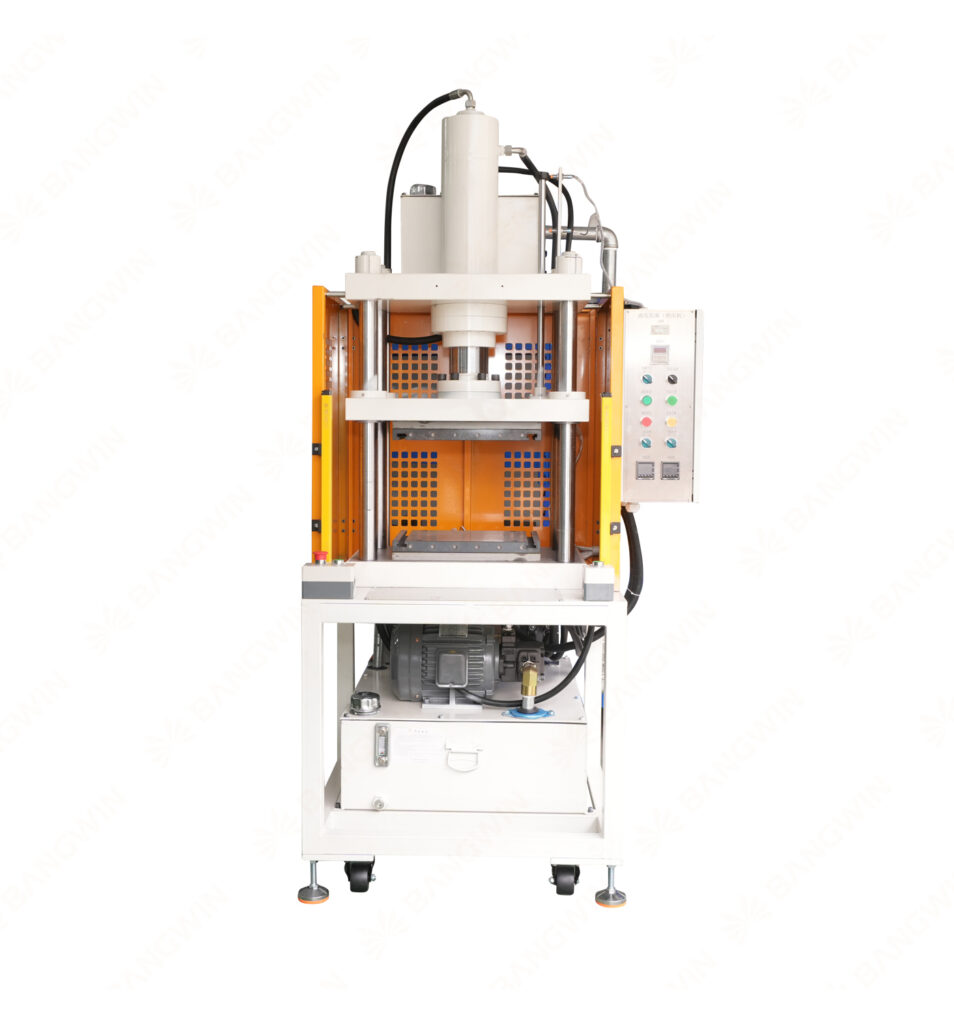
Ultra-thin Vapor Chamber Laser Sealing Machine Guide
Ultra-thin Vapor Chamber Laser Sealing Machine for Precision Manufacturing
An Ultra-thin Vapor Chamber Laser Sealing Machine helps manufacturers seal thin vapor chamber components with precision and controlled heat input. These components support thermal management in smartphones, tablets, laptops, gaming devices, and other compact electronics.
As electronic products become thinner, their cooling systems must occupy less space. At the same time, they must transfer heat efficiently and maintain structural integrity. Therefore, manufacturers need sealing equipment that suits thin materials and demanding production requirements.
Laser sealing offers a concentrated heat source and supports localized processing. When engineers configure the process correctly, it can help limit unnecessary thermal exposure around the sealing area. In addition, automated operation can improve process consistency and production traceability.
cncoolingthermal provides equipment for vapor chamber manufacturing and thermal management production. Manufacturers can explore its equipment portfolio to identify solutions that match their production requirements.
This article explains how an ultra-thin vapor chamber laser sealing machine works, its major benefits, important technical considerations, and selection criteria.
1. What Is an Ultra-thin Vapor Chamber Laser Sealing Machine?
An Ultra-thin Vapor Chamber Laser Sealing Machine is specialized equipment designed to seal the edges or designated joints of thin vapor chamber assemblies using laser energy.
A vapor chamber is a flat, two-phase heat transfer device. It contains a sealed internal cavity, a working fluid, and a wick structure. During operation, the fluid evaporates near a heat source and condenses in cooler areas. This process helps distribute heat across the chamber.
However, the chamber needs a sealed environment to maintain its working-fluid inventory and thermal performance. Leakage can cause fluid loss and reduce heat transfer efficiency. Consequently, sealing quality is a critical part of vapor chamber manufacturing.
Ultra-thin designs introduce additional challenges. Thin metal sheets can deform under excessive heat or mechanical pressure. Furthermore, small dimensional variations can affect alignment and joint consistency.
A laser sealing machine directs energy toward a defined processing area. Depending on the machine configuration, it may use precision fixtures, motion control, programmable parameters, and process monitoring to support repeatable results.
For manufacturers developing compact cooling components, the correct equipment should match the chamber design, material, sealing path, and production volume.
Suggested internal link: Vapor Chamber Production Line
2. Why Ultra-thin Vapor Chambers Require Precision Sealing
2.1 Thin Materials Need Controlled Heat Input
Ultra-thin vapor chambers use thin metal covers and compact internal structures. These materials respond quickly to localized heating.
Excessive laser energy may cause burn-through, distortion, or inconsistent weld formation. Conversely, insufficient energy may produce incomplete fusion or weak joints.
Therefore, engineers must optimize laser power, processing speed, focal position, and other relevant parameters. The appropriate settings depend on the material and joint geometry.
2.2 Compact Designs Require Accurate Positioning
Electronic devices provide limited space for thermal management components. A warped vapor chamber may create assembly problems or reduce contact with adjacent components.
Accurate positioning helps maintain the required sealing path. In addition, suitable fixtures reduce movement during processing.
Manufacturers should consider both positioning accuracy and fixture repeatability when evaluating equipment.
2.3 Sealing Must Support Leak Tightness
A vapor chamber relies on a closed internal cavity. The sealing process must create a continuous joint that meets the product’s leak-tightness requirements.
Visual inspection can identify certain surface defects. However, it cannot confirm every potential leak. Manufacturers should establish appropriate leak-testing procedures.
2.4 Thermal Performance Depends on Overall Product Quality
Sealing integrity is essential, but it does not determine thermal performance alone. Wick structure, internal cavity geometry, working-fluid quantity, and material selection also influence heat transfer.
For this reason, manufacturers should evaluate sealing quality alongside the finished chamber’s performance.
3. How a Laser Sealing Machine Works
An Ultra-thin Vapor Chamber Laser Sealing Machine uses concentrated laser energy to join designated metal areas. The exact process depends on the material, chamber structure, joint design, and selected laser system.
A typical workflow includes the following stages.
Step 1: Prepare the Components
Operators inspect the chamber components before loading. They clean the sealing surfaces according to the approved manufacturing procedure and check for scratches, contamination, or damage.
Clean surfaces help reduce process variation. They also support more consistent joint formation.
Step 2: Position the Vapor Chamber
The operator or automated handling system places the workpiece in a dedicated fixture. The fixture controls the chamber’s position and supports the joint during processing.
For thin components, the fixture must provide adequate support without applying excessive clamping force.
Step 3: Set the Laser Parameters
Engineers configure the process according to the material and joint requirements. Relevant variables may include:
Laser power
Processing speed
Focal position
Beam path
Pulse duration and frequency, where applicable
Clamping conditions
No single parameter combination suits every vapor chamber. Therefore, manufacturers should validate the settings using representative workpieces.
Step 4: Perform the Sealing Process
The laser follows a programmed path along the required joint. Depending on the equipment, the system may use scanning optics, a motion stage, or another positioning arrangement.
Stable movement helps maintain a consistent seam. Meanwhile, appropriate shielding and environmental controls can help manage oxidation when the application requires them.
Step 5: Inspect the Sealed Component
After processing, the manufacturer checks the joint for visible defects and dimensional changes.
The inspection plan may include visual examination, dimensional measurement, weld inspection, and leak testing. Additional tests may be necessary for demanding applications.
Step 6: Record Process Information
Automated equipment may support recipe storage, alarms, or production data collection. Available features depend on the selected configuration.
Process records help manufacturers investigate defects and maintain consistent production standards.
4. Key Components of the Equipment
Machine designs vary by supplier and application. However, several systems commonly influence sealing performance.
4.1 Laser Source
The laser source supplies the energy required for joining. Manufacturers should select a suitable source based on material type, thickness, joint geometry, and required seam quality.
Laser type alone does not determine the final result. Beam quality, output stability, and process compatibility also matter.
4.2 Optical System
The optical system directs and focuses the laser beam. Correct focal positioning helps maintain the intended energy distribution across the joint.
For narrow sealing paths, the optical setup must also match the required seam dimensions and processing tolerances.
4.3 Motion and Positioning System
The motion system controls movement between the laser beam and the workpiece. Depending on the machine design, it may include servo stages, scanning optics, or multi-axis motion.
Accurate positioning helps maintain the programmed path. It also supports repeatability across production batches.
4.4 Precision Fixture
The fixture holds the vapor chamber during processing. It should support thin materials while avoiding unwanted deformation.
A suitable fixture improves alignment and reduces movement. However, its design must account for the chamber’s shape, dimensions, and manufacturing tolerances.
4.5 Control System
The control system manages machine settings and processing sequences. Depending on its capabilities, it may support recipe management, alarms, parameter storage, and production records.
These functions can help operators repeat validated processes and reduce setup errors.
4.6 Safety Systems
Laser equipment requires appropriate protective measures. These may include an enclosed processing area, safety interlocks, protective viewing windows, and suitable extraction systems.
The final design must comply with applicable regulations and the laser system’s safety requirements.
Suggested internal link: Laser Welding Machine for Vapor Chamber
5. Main Benefits of Laser Sealing
5.1 Localized Heat Input
Laser energy concentrates on a defined processing area. Consequently, the process can limit unnecessary heating of surrounding material compared with some broader heating methods.
Nevertheless, laser processing still creates heat-affected zones. Engineers must optimize the parameters to control thermal distortion.
5.2 Precision Processing
A suitable optical and motion system can follow narrow, programmed sealing paths. This capability benefits compact products with restricted sealing areas.
Actual precision depends on the equipment, fixture, material condition, and process settings. Manufacturers should verify performance with representative workpieces.
5.3 Repeatable Results
Automated parameter control can reduce variations caused by manual operation. In addition, stored recipes help operators reproduce approved processing conditions.
However, repeatability still requires proper calibration, fixture maintenance, and process monitoring.
5.4 Automation Potential
Laser sealing equipment can form part of a larger manufacturing line. Manufacturers may connect it with loading, positioning, inspection, and unloading stations.
Automation can reduce manual handling and improve workflow consistency. However, practical output depends on the complete cycle, including loading and inspection.
5.5 Flexible Product Changeovers
Programmable processing can help manufacturers handle different chamber models. Operators can select a validated recipe and change tooling when the product design requires it.
Each new model still needs appropriate validation. A recipe that works for one thickness may not suit another.
5.6 Suitability for Compact Assemblies
Ultra-thin vapor chambers often require narrow sealing areas and careful dimensional control. A properly configured laser system can address these requirements.
Manufacturers should still assess joint accessibility, material compatibility, and thermal distortion before choosing the process.
6. Industrial Applications
Ultra-thin vapor chambers support thermal management where space and heat dissipation are both important. Therefore, precision sealing equipment can serve manufacturers supplying several electronics markets.
6.1 Smartphones
Smartphones combine powerful processors with limited internal space. Ultra-thin vapor chambers can spread heat across a larger area and help manage localized hotspots.
Precise sealing supports the integrity of the chamber assembly. Meanwhile, dimensional control helps the component fit within the device.
6.2 Laptops and Tablets
Portable computers need efficient cooling without excessive thickness or weight. Vapor chambers can spread heat around processors and other high-power components.
Manufacturers must balance thermal performance with the product’s mechanical and dimensional requirements.
6.3 Gaming Devices
Gaming devices may generate concentrated heat during demanding workloads. A well-designed vapor chamber can distribute heat across a larger surface.
Reliable sealing helps preserve the internal environment needed for the intended heat transfer process.
6.4 Compact Electronic Modules
Other compact electronic products may also use thin heat spreaders. These include specialized electronic assemblies with restricted installation space.
Manufacturers should match the sealing process to the component design, operating environment, and reliability targets.
6.5 Advanced Thermal Management Products
As electronic systems become more compact, manufacturers continue to evaluate different heat-spreading structures. Ultra-thin vapor chambers represent one option for applications that require efficient heat distribution.
The exact application suitability depends on the thermal load, available space, and system-level cooling design.
7. Laser Sealing Compared with Other Joining Methods
Manufacturers can use different joining methods depending on material, structure, and production requirements. Laser sealing is one option, rather than a universal replacement for every process.
Comparison factor | Laser sealing | Resistance welding | Brazing or furnace joining |
Heat application | Concentrated laser energy | Electrical resistance heating at the joint | Heat applied through a broader process zone |
Process control | Programmable beam and motion parameters | Controlled current, force, and time | Controlled temperature profile and atmosphere |
Access requirements | Requires suitable optical access | Requires electrode access | Depends on loading and furnace setup |
Thin-material suitability | Can suit thin materials after validation | Depends on electrode design and workpiece structure | Depends on material, filler, and thermal cycle |
Automation potential | Can integrate with programmed motion | Can integrate with automated handling | Can support batch or continuous production |
Main considerations | Reflection, fit-up, heat input, and weld defects | Electrode wear, contact conditions, and deformation | Thermal exposure, filler compatibility, and distortion |
The best method depends on the chamber’s construction. Laser sealing may be attractive when a narrow, controlled seam is necessary.
However, manufacturers should compare joint quality, throughput, operating costs, and validation results before selecting a process.
For additional background on industrial laser applications and safety, visit the Laser Institute of America.
8. Important Technical Factors
Before purchasing an Ultra-thin Vapor Chamber Laser Sealing Machine, manufacturers should assess several technical factors.
8.1 Material Compatibility
The cover and base materials influence laser absorption, heat conduction, and weld formation. Surface coatings and contamination can also affect the process.
Provide the supplier with the exact material grade and surface condition. If the chamber combines different materials, include that information during the feasibility assessment.
8.2 Thickness and Joint Geometry
Material thickness affects how quickly heat spreads through the workpiece. Meanwhile, joint design determines the required beam path and energy distribution.
Manufacturers should evaluate representative samples across the expected thickness range. This approach helps identify process limits before production begins.
8.3 Seam Quality
The joint must meet the product’s structural and leak-tightness specifications. Depending on the design, acceptance criteria may address continuity, porosity, cracking, spatter, and visible deformation.
Define these criteria before equipment acceptance. Otherwise, different teams may evaluate quality inconsistently.
8.4 Dimensional Stability
Thin chambers can deform during clamping and heating. Fixture support, joint sequence, and parameter control can help manage this risk.
Measure workpieces before and after sealing. The results can show whether the process remains within dimensional tolerances.
8.5 Production Capacity
Practical output depends on more than laser speed. Loading, positioning, clamping, inspection, and unloading also affect the cycle.
Ask the supplier to evaluate the complete process using your actual workpieces. A representative trial provides a more useful estimate than a laser-only speed figure.
8.6 Process Monitoring
Monitoring features can help identify changes during production. Depending on the machine, these features may include parameter logging, alarms, or vision-assisted positioning.
However, monitoring does not replace physical quality verification. Manufacturers still need a suitable inspection plan.
9. How to Select the Right Machine
Selecting the right machine requires a clear understanding of product specifications and manufacturing targets. Instead of focusing on one headline specification, compare the complete process capability.
Step 1: Define Product Requirements
Prepare drawings and samples for every chamber model. Include material grades, thicknesses, dimensions, sealing paths, and allowable deformation.
Also specify whether internal structures sit near the sealing zone. These details may influence fixture design and processing parameters.
Step 2: Confirm Process Feasibility
Ask the equipment supplier to perform trials with representative workpieces. Evaluate seam continuity, leakage, deformation, and visible defects.
If the product uses different material combinations, test each relevant configuration. Do not assume one validated process will work across all models.
Step 3: Review Positioning and Fixturing
Check how the machine locates and secures the workpiece. Ask how it manages product variation and whether operators can make adjustments between batches.
For high-volume manufacturing, stable positioning helps reduce alignment-related defects.
Step 4: Evaluate Automation Requirements
Determine whether you need manual loading, semi-automatic operation, or an integrated production system.
For example, high-volume factories may benefit from automatic loading and unloading. Meanwhile, smaller production runs may prioritize flexible tooling and convenient recipe changes.
Step 5: Establish Acceptance Criteria
Define the required cycle time, sealing quality, dimensional tolerance, and leak-test results. Then agree on the testing procedure used during machine acceptance.
This step helps align the supplier’s commitments with your production requirements.
Step 6: Calculate Total Operating Cost
Purchase price is only one part of the investment. Also consider tooling, maintenance, operator training, consumables, energy use, and expected production yield.
A suitable machine should meet quality requirements while supporting the intended production volume and operating budget.
10. Integrating Laser Sealing into a Production Line
An Ultra-thin Vapor Chamber Laser Sealing Machine can operate as a standalone station or within a coordinated manufacturing line.
The best arrangement depends on the chamber design and process sequence. A typical workflow may include component preparation, assembly, sealing, inspection, and subsequent processing.
A representative process sequence is:
- Component preparation: Clean and inspect the metal components.
- Chamber assembly: Position the covers and internal structures.
- Laser sealing: Apply the validated sealing process.
- Quality inspection: Check the seam and relevant dimensions.
- Leak testing: Verify that the chamber meets its leak-tightness requirements.
- Downstream processing: Complete filling, finishing, and performance testing as required.
The exact sequence varies by product design. Some chambers require additional operations before or after sealing.
Manufacturers should therefore map the complete process before finalizing the equipment layout.
Suggested internal links:
Vapor Chamber Production Line
Vapor Chamber Vacuum Filling & Welding Machine
Vapor Chamber Thermal Performance Tester
These links should point to the corresponding published product pages on your website.
11. Quality Control and Process Optimization
Reliable production requires a documented quality-control plan. Even a capable laser system cannot compensate for poor material preparation or inconsistent assembly.
11.1 Establish a Process Window
Engineers should test different parameter combinations during process development. They should then identify a suitable operating window rather than relying on one isolated setting.
The validated range should account for normal material and dimensional variation. In addition, operators should follow defined change-control procedures.
11.2 Inspect Sealing Surfaces
Contamination, scratches, gaps, and inconsistent fit-up can affect the final joint. Therefore, inspect the workpieces before sealing.
A clear preparation standard helps reduce avoidable defects. It also makes troubleshooting more efficient.
11.3 Verify Leak Tightness
Select a leak-testing method that suits the chamber design and required acceptance level. Establish the test conditions, limits, and sampling plan before routine production.
For critical applications, manufacturers may need additional validation beyond visual inspection.
11.4 Monitor Dimensional Changes
Measure chamber flatness and other critical dimensions after sealing. Compare the results against the product drawing.
If deformation increases, investigate the fixture, clamping force, laser settings, and processing sequence. Change one variable at a time whenever practical.
11.5 Track Defects and Yield
Record recurring defects, rework, and rejected components. These records can reveal patterns linked to specific products, fixtures, or processing conditions.
Over time, the data can support more effective process improvement. It can also help manufacturers determine whether additional automation or inspection would be worthwhile.
12. Maintenance and Operating Best Practices
Routine maintenance supports stable performance and helps reduce unplanned downtime.
Manufacturers should establish a maintenance schedule based on the supplier’s instructions and actual operating conditions.
Recommended practices include:
- Inspect optical components: Keep the laser delivery system clean and check it according to the supplier’s procedures.
- Check fixtures: Look for wear, damage, contamination, and changes in workpiece positioning.
- Verify calibration: Confirm that motion, positioning, and relevant monitoring systems remain within required limits.
- Review process parameters: Protect validated recipes from unauthorized changes.
- Inspect safety systems: Test interlocks, enclosures, and other protective features according to the maintenance plan.
- Train operators: Ensure operators understand safe operation, routine checks, and escalation procedures.
- Document maintenance: Record inspections, repairs, calibration, and recurring production issues.
When a defect appears, avoid changing several parameters simultaneously. Instead, document the issue and follow a structured troubleshooting procedure.
This approach makes it easier to identify the cause and verify corrective actions.
13. Why Consider cncoolingthermal?
Manufacturers often need more than a single machine. They may also need compatible equipment for different manufacturing stages, technical discussions about process requirements, and a practical equipment integration plan.
cncoolingthermal focuses on equipment related to vapor chamber and thermal management manufacturing. Its website provides a starting point for exploring equipment options and identifying solutions relevant to your production needs.
When evaluating a supplier, consider the following factors:
- Application suitability: Can the supplier evaluate your actual chamber design and material specifications?
- Process validation: Can the supplier conduct sealing trials and help define suitable acceptance criteria?
- Equipment integration: Can the proposed system fit your existing production workflow?
- Operational support: Are installation, training, maintenance, and technical support clearly defined?
- Documentation: Can the supplier provide relevant machine specifications, operating procedures, and acceptance-test documentation?
These questions help you compare suppliers based on manufacturing requirements rather than price alone.
Visit cncoolingthermal.com to explore related equipment. When requesting a technical evaluation, provide your chamber drawings, material details, and expected production volume.
14. Frequently Asked Questions
Q1. What does an Ultra-thin Vapor Chamber Laser Sealing Machine do?
It uses laser energy to seal designated joints in thin vapor chamber assemblies. The process aims to create a reliable enclosure while controlling heat input and deformation.
Q2. Why use laser sealing for ultra-thin vapor chambers?
Laser sealing provides localized energy and programmable processing. With suitable tooling and validated parameters, it can support narrow sealing paths and repeatable production.
However, actual performance depends on the material, joint design, and machine configuration.
Q3. Can laser sealing prevent all vapor chamber leaks?
No machine can guarantee zero leakage under every condition. Leak prevention depends on material quality, joint design, surface preparation, process stability, and inspection.
Manufacturers should validate the process with suitable leak tests.
Q4. Which materials can the machine seal?
Material compatibility depends on the laser source, workpiece thickness, surface condition, and joint configuration. Manufacturers should provide exact material specifications and conduct process trials before production.
Q5. Does laser sealing cause deformation?
Laser sealing can cause thermal deformation, especially in thin materials. However, appropriate fixtures, energy control, and processing sequences can help manage this risk.
Manufacturers should measure deformation during process validation.
Q6. Can the machine support automated production?
Yes, a suitable machine can integrate with automated positioning, handling, inspection, and production tracking systems. Available functions depend on the selected configuration.
Manufacturers should assess the entire production cycle when estimating output.
Q7. What information should I provide when requesting a quotation?
Prepare the following information:
- Chamber drawings and dimensions
- Material types and thicknesses
- Sealing path and joint design
- Required leak-tightness and dimensional criteria
- Expected production volume and cycle-time target
- Automation preferences and factory integration requirements
Representative workpieces can also help the supplier assess process feasibility.
Q8. How do I verify sealing quality?
Use a defined inspection plan that matches the product requirements. Depending on the design, this may include visual inspection, dimensional measurement, weld examination, and leak testing.
For critical applications, include reliability testing where appropriate.
Q9. Can one machine handle multiple vapor chamber models?
Potentially, yes. However, different dimensions, materials, and sealing paths may require different fixtures or validated recipes.
Ask the supplier to evaluate the full product range before selecting the machine.
Q10. What other equipment may be needed for vapor chamber manufacturing?
A complete manufacturing process may require assembly equipment, laser sealing systems, vacuum filling equipment, cleaning systems, inspection equipment, and thermal performance testers.
The actual equipment list depends on the chamber structure and process sequence.
15. Conclusion
An Ultra-thin Vapor Chamber Laser Sealing Machine can support precision manufacturing for compact thermal management components. Its localized energy delivery and programmable motion make it a potential fit for thin metal assemblies with demanding sealing requirements.
However, machine performance depends on more than laser specifications. Material compatibility, fixture design, joint geometry, process validation, and leak testing all contribute to the final result.
Manufacturers should define their product requirements first. Next, they should conduct representative trials and verify the machine’s performance against measurable acceptance criteria.
For companies developing or expanding vapor chamber production, cncoolingthermal offers a starting point for exploring related manufacturing equipment. Visit https://cncoolingthermal.com/ to review relevant equipment and discuss your application requirements.