
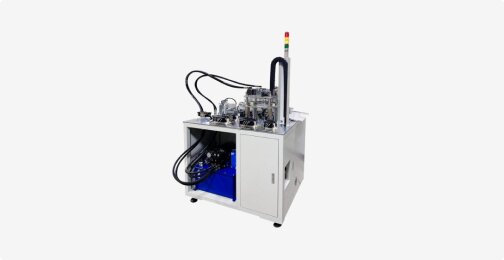
Heat Pipe Filling & Welding Machine: Complete Guide
1. What Is a Heat Pipe Filling & Welding Machine?
A Heat Pipe Filling & Welding Machine is specialized equipment for charging working fluid into heat pipes and sealing the filling opening.
A typical heat pipe contains three main elements:
A sealed metal container.
An internal wick structure.
A working fluid.
The working fluid absorbs heat in the evaporator section. It changes into vapor and moves toward the cooler condenser section. There, the vapor releases heat and condenses.
The liquid then returns through the wick structure. This cycle continues during operation.
However, the heat pipe must maintain a suitable internal environment. Incorrect fluid quantity can affect its thermal performance. Residual gases can also reduce heat transfer efficiency.
Therefore, filling and sealing require careful process control.
1.1 Main Functions
A Heat Pipe Filling & Welding Machine generally performs several operations:
- Connects the heat pipe to the filling system.
- Supports vacuum evacuation when included in the machine configuration.
- Controls working-fluid injection.
- Helps achieve a repeatable filling quantity.
- Seals the filling tube or opening.
- Supports consistent production records and inspection.
The exact functions depend on the equipment design.
Some machines combine evacuation, filling, and sealing in one system. Others work with separate vacuum equipment or downstream welding stations.
1.2 Why Manufacturers Need Specialized Equipment
Manual filling can create inconsistencies between products. Operators must control fluid quantity, vacuum conditions, and sealing operations.
These steps require repeatable procedures.
A specialized machine helps standardize the process. It also reduces unnecessary handling between production stages.
For manufacturers producing different heat pipe sizes, equipment flexibility is especially important.
2. Why Filling and Welding Matter in Heat Pipe Production
Filling and welding directly influence the internal condition of a finished heat pipe.
Even a well-designed heat pipe may perform poorly if manufacturers control these operations incorrectly.
2.1 Accurate Working-Fluid Charging
Every heat pipe requires a suitable working-fluid quantity.
Too little fluid may cause insufficient liquid circulation. It can also increase the risk of local dry-out under certain operating conditions.
Too much fluid may affect vapor space and thermal behavior. It can also create unstable operating conditions.
The ideal quantity depends on several factors:
- Heat pipe diameter and length.
- Internal volume.
- Wick structure.
- Working fluid.
- Operating temperature.
- Intended heat load.
- Product design.
Therefore, manufacturers should determine filling parameters through product design and process validation.
2.2 Removing Residual Air and Non-Condensable Gases
Air and other non-condensable gases can interfere with heat pipe operation.
They may accumulate in the condenser section. This reduces the effective heat transfer area.
Vacuum evacuation helps remove unwanted gases before filling. However, the required vacuum level depends on the product and manufacturing process.
A vacuum pump’s rated ultimate pressure does not represent the actual pressure inside every production workpiece. Manufacturers should validate vacuum performance under real operating conditions.
2.3 Reliable Sealing
After filling, manufacturers must close the heat pipe completely.
The sealing process must prevent working-fluid leakage. It must also protect the internal vacuum environment.
A poor weld may cause:
- Working-fluid loss.
- Air leakage.
- Reduced thermal performance.
- Product rejection.
- Long-term reliability problems.
Therefore, welding quality is a critical part of heat pipe manufacturing.
3. How Does a Heat Pipe Filling & Welding Machine Work?
The machine follows a controlled sequence. The exact process varies according to the heat pipe structure and equipment configuration.
A typical production workflow includes the following stages.
3.1 Workpiece Preparation
Before filling, operators prepare the heat pipe.
The tube should complete the required forming and internal preparation processes. Its internal wick structure must also meet product requirements.
Typical preparation steps include:
- Tube cutting and forming.
- Internal cleaning.
- Wick installation.
- Drying or dry-out treatment.
- Visual inspection.
- Connection to the filling system.
Manufacturers should confirm that the workpiece meets the required cleanliness and dryness standards.
3.2 Vacuum Evacuation
The machine connects the heat pipe to a vacuum system.
The system removes residual air and other unwanted gases. Depending on the process, manufacturers may use vacuum evacuation before fluid injection.
Important process parameters include:
- Target vacuum level.
- Evacuation time.
- Workpiece temperature.
- System leakage.
- Connection sealing.
- Pumping system capacity.
The actual vacuum condition should be measured and validated at the relevant process point.
3.3 Working-Fluid Filling
After evacuation, the machine introduces the specified working fluid.
Common heat pipe working fluids include water, methanol, and other fluids. The selection depends on the operating temperature and product design.
The filling system should control the charging quantity. It may use a calibrated dosing mechanism or another validated metering method.
Manufacturers should consider:
- Fluid compatibility.
- Filling accuracy.
- Fluid purity.
- Charging speed.
- Workpiece positioning.
The filling quantity must match the heat pipe’s design requirements.
3.4 Filling Opening Sealing
After charging, the machine seals the filling opening.
Depending on the tube structure, manufacturers may use resistance welding, laser welding, or another suitable sealing method.
The selected process must match the tube material and geometry.
A stable sealing process helps prevent fluid leakage and air infiltration.
3.5 Post-Welding Inspection
After sealing, manufacturers inspect the finished workpiece.
Inspection may include:
- Weld appearance.
- Dimensional checks.
- Leak testing.
- Pressure or vacuum-related checks.
- Thermal performance testing.
The inspection method depends on product specifications and quality requirements.
Not every filling and welding machine includes these testing functions. Manufacturers may need separate inspection equipment.
4. Main Components of the Machine
A Heat Pipe Filling & Welding Machine may include several functional systems.
The configuration depends on production capacity, product dimensions, and automation requirements.
4.1 Vacuum System
The vacuum system removes air and other gases from the heat pipe.
It may include:
- Vacuum pump.
- Vacuum pipelines.
- Pressure sensors.
- Vacuum chambers or workpiece connections.
- Control components.
Manufacturers should evaluate pumping speed and vacuum performance under actual production conditions.
4.2 Working-Fluid Storage and Supply System
This system stores and supplies the selected working fluid.
Its design should support stable fluid delivery and contamination control.
Important considerations include:
- Fluid compatibility.
- Storage capacity.
- Pipeline cleanliness.
- Metering accuracy.
- Maintenance requirements.
4.3 Filling and Metering Unit
The filling unit controls how much working fluid enters each heat pipe.
A suitable metering system helps maintain consistent charging quantities.
Manufacturers should confirm the required accuracy range before selecting equipment.
4.4 Welding System
The welding unit seals the filling opening.
Depending on the machine, it may use resistance welding or another welding technology.
The welding system should provide stable process parameters. These may include welding current, pressure, time, energy, or laser settings.
The correct parameters depend on the material and joint design.
4.5 Clamping and Positioning System
The positioning system holds the workpiece during filling and sealing.
Accurate positioning helps improve process consistency. It also reduces the risk of connection errors.
For different product sizes, manufacturers should evaluate fixture flexibility and changeover time.
4.6 Electrical Control System
The control system manages the operating sequence.
It may support:
- Parameter setting.
- Process monitoring.
- Automatic operation.
- Alarm notifications.
- Production data recording.
- Operator interface.
An appropriate control system helps manufacturers standardize production procedures.
5. Different Filling and Welding Methods
Different heat pipe products require different filling and sealing methods.
Manufacturers should select the process according to tube material, dimensions, and production requirements.
5.1 Vacuum-Assisted Filling
Vacuum-assisted filling removes residual gases before working-fluid charging.
This method supports control of the internal environment.
It is suitable for manufacturing processes that require a controlled evacuation and filling sequence.
However, actual results depend on system design, connection quality, and process parameters.
5.2 Quantitative Filling
Quantitative filling controls the working-fluid amount for each heat pipe.
This method helps reduce variation between products.
It is particularly useful when manufacturers produce large quantities of similar heat pipes.
The required filling tolerance should come from product specifications and process validation.
5.3 Resistance Welding
Resistance welding uses electrical current and pressure to generate heat at the joint.
It can provide a practical sealing solution for compatible materials and joint structures.
Manufacturers should validate electrode condition, contact pressure, current, and welding time.
5.4 Laser Welding
Laser welding uses concentrated laser energy to create a localized weld.
It can support precise welding for suitable heat pipe structures.
Its suitability depends on material thickness, joint geometry, surface condition, and process requirements.
For more information, manufacturers can explore a dedicated Laser Welding Machine for Vapor Chamber. Although vapor chamber and heat pipe products differ, both manufacturing processes may require precise metal sealing.
6. Benefits of Automated Filling and Welding
Automated equipment can improve production consistency and reduce repetitive manual operations.
However, actual benefits depend on machine configuration and process integration.
6.1 Improved Filling Consistency
A controlled filling system helps maintain repeatable fluid quantities.
This reduces dependence on manual estimation.
It also makes process validation easier.
6.2 More Stable Sealing Quality
A controlled welding process helps maintain consistent sealing parameters.
This can reduce defects caused by unstable manual operations.
However, manufacturers still need regular weld inspection and process monitoring.
6.3 Reduced Manual Handling
Combining filling and welding operations can reduce workpiece transfers.
This may simplify production workflows.
It can also reduce handling errors between separate stations.
6.4 Improved Production Efficiency
Automated operation can shorten repetitive production steps.
The actual output depends on:
- Number of workstations.
- Filling cycle time.
- Evacuation time.
- Welding cycle time.
- Loading and unloading methods.
- Product changeover requirements.
Manufacturers should evaluate the complete production cycle rather than one operation alone.
6.5 Better Process Traceability
A machine with suitable control functions may record process parameters.
This helps manufacturers review production history.
It also supports troubleshooting when defects appear.
7. Applications in Heat Pipe Manufacturing
Heat pipes support many thermal management applications.
Filling and welding equipment serves manufacturers producing different heat pipe types.
7.1 Electronics Cooling
Heat pipes transfer heat away from high-temperature electronic components.
Common applications include:
- Laptop cooling systems.
- Desktop computer heat sinks.
- Server cooling assemblies.
- Power electronics.
- Communication equipment.
Filling accuracy and sealing quality help maintain consistent product performance.
7.2 Industrial Heat Dissipation
Industrial equipment often requires reliable thermal management.
Heat pipes can support cooling in control systems, power modules, and specialized machinery.
Manufacturers must match the heat pipe design to the operating environment.
7.3 Automotive Thermal Management
Heat pipes may support thermal management in selected automotive electronic systems.
These applications can require strict dimensional and reliability controls.
Manufacturers should validate filling and sealing processes against the applicable product requirements.
7.4 Consumer Electronics
Consumer electronic devices often require compact cooling components.
Examples include:
- Gaming devices.
- LED lighting systems.
- Compact computing products.
A stable filling process supports consistent manufacturing quality.
8. How to Choose the Right Heat Pipe Filling & Welding Machine
Choosing suitable equipment requires more than comparing machine prices.
Manufacturers should evaluate product compatibility, process capability, and long-term operating costs.
8.1 Confirm Heat Pipe Dimensions
Start by defining the product range.
Consider:
- Tube diameter.
- Tube length.
- Wall thickness.
- Filling opening dimensions.
- Product shape.
The machine fixtures and connections must accommodate the intended products.
8.2 Define Filling Accuracy
Different heat pipes require different working-fluid quantities.
Ask the equipment supplier about its filling method and achievable repeatability.
Also confirm how the system measures and verifies the charging amount.
8.3 Evaluate Vacuum Performance
Vacuum performance directly affects evacuation quality.
Ask for information about:
- Pump configuration.
- Vacuum measurement location.
- Target vacuum range.
- Evacuation cycle time.
- Leakage monitoring.
- Performance under production conditions.
Avoid evaluating equipment only by the vacuum pump’s catalog specification.
8.4 Select a Suitable Welding Method
Choose the welding technology according to the workpiece.
Consider material, thickness, geometry, and sealing requirements.
Ask for sample welding tests when possible.
The test should use actual production materials and representative workpiece dimensions.
8.5 Consider Automation Requirements
Manufacturers may choose manual, semi-automatic, or automatic configurations.
The right option depends on production volume and labor arrangements.
For high-volume production, automatic loading and process control may improve efficiency.
For multiple product types, flexible fixtures and quick changeovers may be more important.
8.6 Check Maintenance and Technical Support
A machine should support stable long-term operation.
Before purchasing, confirm:
- Spare parts availability.
- Maintenance procedures.
- Operator training.
- Technical support.
- Software and control system service.
- Warranty terms.
These factors influence the total cost of ownership.
9. Quality Control During Filling and Welding
Quality control should cover the entire process.
Checking only the final weld appearance cannot confirm internal filling quality.
9.1 Control Working-Fluid Purity
Contaminated working fluid may affect heat pipe performance.
Manufacturers should define fluid storage, handling, and filtration requirements.
They should also prevent contamination during filling.
9.2 Verify Filling Quantity
The filling system should follow validated product parameters.
Manufacturers can establish routine checks using suitable measurement methods.
Any filling deviation should trigger investigation.
9.3 Monitor Vacuum Conditions
Vacuum measurement should reflect the actual process.
Manufacturers should check system connections and leakage regularly.
They should also maintain the vacuum pump according to its operating requirements.
9.4 Inspect Weld Quality
Weld inspection should follow product specifications.
Common inspection methods include visual inspection and suitable leak testing.
For critical products, manufacturers may establish additional destructive or non-destructive inspection procedures.
9.5 Perform Thermal Performance Testing
Thermal performance testing evaluates the finished heat pipe.
It helps verify whether the product meets its intended thermal requirements.
A filling and welding machine does not automatically replace a dedicated thermal performance tester.
10. Common Production Problems and Solutions
Even with specialized equipment, filling and welding problems can occur.
Understanding common causes helps manufacturers improve process stability.
Problem | Possible Cause | Recommended Action |
Incorrect filling quantity | Unstable metering or incorrect settings | Calibrate the filling system |
Slow evacuation | Pump performance or pipeline leakage | Inspect the vacuum system |
Unstable vacuum readings | Poor connections or sensor issues | Check seals and measurement points |
Weak weld | Incorrect welding parameters | Validate current, pressure, and time |
Workpiece leakage | Incomplete or defective sealing | Inspect weld quality and joint design |
Inconsistent product performance | Filling or internal cleanliness variation | Review the complete manufacturing process |
10.1 Filling Quantity Variation
Filling variation may result from unstable fluid delivery.
It may also come from incorrect product settings.
Manufacturers should verify the metering system and establish clear operating procedures.
10.2 Vacuum Problems
Vacuum problems can result from worn seals, loose connections, or insufficient pumping capacity.
Check the system under actual operating conditions.
Do not rely only on the pump’s rated vacuum value.
10.3 Welding Defects
Welding defects may come from incorrect parameters or inconsistent positioning.
Electrode wear and surface contamination can also affect resistance welding.
For laser welding, focus position and surface condition may influence weld formation.
Manufacturers should establish suitable inspection and maintenance routines.
11. Integration with Other Heat Pipe Production Equipment
A Heat Pipe Filling & Welding Machine usually operates as part of a larger production process.
Its performance depends on upstream preparation and downstream inspection.
A typical heat pipe production workflow may include:
- Tube cutting.
- Tube cleanin.
- Wick installation.
- Tube forming and processing.
- Dry-out treatment.
- Vacuum evacuation.
- Working-fluid filling.
- Sealing and welding.
- Leak testing.
- Thermal performance testing.
The exact sequence depends on heat pipe design and manufacturing technology.
11.1 Heat Pipe Necking Machine
A Heat Pipe Necking Machine reduces or shapes the tube end.
This process prepares the tube for subsequent manufacturing operations.
Manufacturers should match the necking dimensions to the filling and sealing design.
11.2 Heat Pipe Powder Filling Machine
Some heat pipes use sintered powder wick structures.
A Heat Pipe Powder Filling Machine supports the powder loading process.
The powder structure affects capillary performance. Therefore, manufacturers should control powder quantity and distribution.
11.3 Heat Pipe Multi-station Dry-out Tester
A Heat Pipe Multi-station Dry-out Tester supports moisture removal from prepared workpieces.
Dry-out requirements depend on the product and process.
Manufacturers should distinguish dry-out from vacuum evacuation and working-fluid filling. These operations serve different purposes.
11.4 Heat Pipe Thermal Performance Tester
A Heat Pipe Thermal Performance Tester evaluates the thermal behavior of finished products.
It helps manufacturers verify product performance against defined requirements.
Combining process equipment with suitable inspection systems creates a more complete quality control workflow.
12. Frequently Asked Questions
Q1: What does a Heat Pipe Filling & Welding Machine do?
It charges working fluid into heat pipes and seals the filling opening. Depending on its configuration, it may also support vacuum evacuation and process monitoring.
Q2: Why does a heat pipe need vacuum filling?
Vacuum evacuation helps remove residual air and non-condensable gases. These gases can interfere with internal heat transfer.
Q3: Which working fluids are used in heat pipes?
Water is common in many heat pipes. Other fluids, such as methanol, may suit different operating temperature ranges. The selection depends on product design.
Q4: Can one machine handle different heat pipe sizes?
Some machines support multiple product sizes through adjustable fixtures. However, the supported range depends on machine design. Manufacturers should confirm compatibility before purchasing.
Q5: What welding methods can seal heat pipes?
Resistance welding and laser welding are possible options. The correct method depends on tube material, thickness, joint geometry, and process requirements.
Q6: Does the machine include leak testing?
Not necessarily. Some configurations may integrate inspection functions. Others require a separate leak testing station.
Q7: How can manufacturers improve filling accuracy?
They should use a suitable metering system and maintain stable operating parameters. Regular calibration and process verification also help.
Q8: What is the difference between filling and degassing?
Degassing removes unwanted gases and supports control of the internal environment. Filling introduces the specified working fluid. These operations are related but serve different purposes.
Q9: Is automated filling and welding suitable for mass production?
Yes, when the machine matches the product range and production requirements. Automation can reduce repetitive handling and improve process consistency.
Q10: How should manufacturers select a supplier?
Evaluate equipment capability, product compatibility, process validation, technical support, and maintenance requirements. Request sample tests using actual workpieces whenever possible.
13. Conclusion
A Heat Pipe Filling & Welding Machine plays an important role in modern heat pipe manufacturing.
It supports controlled working-fluid charging and reliable sealing. Depending on its configuration, it may also integrate vacuum evacuation and process monitoring.
For manufacturers, the right equipment should match product dimensions, filling requirements, welding technology, and production capacity.
Quality control remains essential throughout the process. Manufacturers should validate vacuum conditions, filling accuracy, weld integrity, and finished product performance.
cncoolingthermal focuses on equipment solutions for vapor chamber and heat pipe manufacturing. Manufacturers can evaluate suitable equipment configurations according to their production processes and product requirements.