
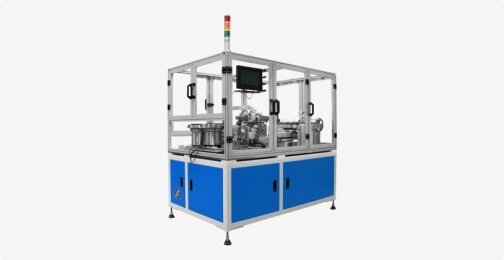
Vapor Chamber Degassing Machine: Process and Benefits
1. What Is a Vapor Chamber Degassing Machine?
A Vapor Chamber Degassing Machine is specialized manufacturing equipment used to remove unwanted gases and volatile residues from vapor chamber assemblies or their internal working environment. Depending on the production process, degassing may take place before working-fluid filling, during vacuum processing, or as part of a combined evacuation and sealing operation.
A vapor chamber is a two-phase heat transfer device. It contains a sealed enclosure, a working fluid, and an internal wick structure. During operation, the working fluid evaporates near a heat source and condenses in a cooler region. This cycle distributes heat across the chamber.
However, non-condensable gases can interfere with this process. They may occupy part of the internal vapor space and reduce the effective area available for condensation. Consequently, poor gas removal can contribute to inconsistent thermal performance.
A vapor chamber degassing machine helps manufacturers control this important production stage. Depending on its design, the equipment may use a vacuum system, controlled heating, process fixtures, and monitoring instruments to remove residual gases.
The exact configuration depends on the chamber structure, materials, working fluid, and manufacturing sequence. Some systems perform degassing as a standalone operation. Others integrate it with vacuum filling, liquid charging, and sealing equipment.
For manufacturers, the objective is straightforward: establish a repeatable process that supports internal cleanliness, controlled evacuation, and consistent product quality.
2. Why Degassing Matters in Vapor Chamber Manufacturing
Degassing is not simply an additional manufacturing step. It supports the preparation of the internal environment required for reliable two-phase heat transfer.
2.1 Removing Non-Condensable Gases
Non-condensable gases do not participate in the normal evaporation and condensation cycle of the working fluid. Instead, they can accumulate in parts of the vapor chamber and obstruct vapor movement or condensation.
As a result, the chamber may not use its available condensation area effectively. The severity depends on the amount of residual gas, its distribution, and the chamber’s operating conditions.
A controlled degassing process helps reduce this risk. However, its effectiveness also depends on leak prevention, material cleanliness, and subsequent sealing quality.
2.2 Supporting Consistent Vacuum Conditions
Many vapor chamber manufacturing processes require evacuation before working-fluid charging and final sealing. The target vacuum depends on the product design and process specification.
A suitable degassing machine helps manufacturers reach and maintain the required process conditions. It can also support repeatable evacuation cycles across production batches.
Nevertheless, reaching a low pressure reading does not automatically prove that every internal surface is free from contamination or that the finished chamber is leak-tight.
2.3 Reducing Residual Contamination
Moisture, trapped air, and volatile residues may remain after forming, cleaning, assembly, or handling. Their presence can affect the internal environment.
Depending on the process, controlled heating under vacuum may help release moisture or volatile substances. Manufacturers must select compatible temperatures and cycle times to avoid damaging the chamber, wick structure, joints, or other components.
Degassing should therefore work alongside effective cleaning and drying procedures. It cannot compensate for every contamination problem.
2.4 Improving Process Repeatability
Manual vacuum processing can introduce variations in handling, timing, temperature, and pressure control.
A properly configured Vapor Chamber Degassing Machine can standardize key process steps. Automated recipes may help operators repeat established settings and identify deviations.
This repeatability is particularly valuable when manufacturers produce multiple chamber sizes or run frequent production batches.
3. How a Vapor Chamber Degassing Machine Works
A vapor chamber degassing machine generally creates controlled conditions that encourage unwanted gases and certain volatile substances to leave the assembly.
The precise mechanism depends on whether the system processes an empty chamber, an assembled chamber, or a component before fluid charging.
3.1 Loading and Fixture Positioning
Operators place the workpieces into a designated fixture or vacuum chamber. The fixture keeps the parts stable and provides suitable access for evacuation.
Fixture design matters because trapped pockets, blocked openings, or poorly arranged parts can slow gas removal. For production equipment, manufacturers should consider loading convenience, chamber size, and compatibility with different product dimensions.
3.2 Vacuum Evacuation
The machine closes its vacuum chamber and starts the evacuation sequence. A vacuum pump removes gas from the processing space.
As pressure decreases, gas can escape from accessible internal spaces through the available flow paths. However, complex wick structures, narrow channels, and trapped volumes may require carefully designed process conditions.
The pressure reached by the system depends on the vacuum pump, chamber leakage, outgassing load, piping, valves, and workpiece configuration.
3.3 Controlled Heating When Required
Some degassing processes use controlled heating to accelerate the release of moisture or volatile substances.
Heating can increase the rate at which certain contaminants leave surfaces and materials. However, temperature must remain compatible with the workpiece and the process sequence.
Excessive heating may damage coatings, seals, fixtures, or internal components. Therefore, temperature selection should follow product-specific validation rather than a universal setting.
3.4 Holding and Monitoring
The equipment maintains the specified conditions for a defined period. During this stage, the control system may monitor pressure, temperature, and elapsed time.
A pressure trend can help operators understand whether the chamber is approaching a stable condition. A rising pressure may indicate continued outgassing, leakage, or other process issues.
Pressure behavior alone cannot identify every root cause. Additional checks may be needed when a cycle fails to meet its acceptance criteria.
3.5 Completing the Cycle
Once the process reaches its specified endpoint, the system follows the programmed sequence. Depending on the machine design, this may include controlled cooling, isolation, venting, or transfer to the next operation.
If the degassing step precedes working-fluid filling, the workpiece may move directly to a compatible vacuum filling system. The transition should minimize exposure to moisture and ambient contamination.
A degassing machine does not necessarily perform fluid charging or final sealing. Those functions require dedicated equipment or a validated integrated system.
4. Key Stages of the Degassing Process
A typical vapor chamber manufacturing workflow may include the following stages. Actual sequencing varies with the chamber design and production method.
Stage 1: Workpiece preparation
Inspect the assembled chamber or components. Confirm that cleaning, drying, and preliminary assembly meet the process requirements.
Stage 2: Loading and sealing the process chamber
Position workpieces in the fixtures. Check the vacuum chamber, door seals, and relevant connections before starting the cycle.
Stage 3: Evacuation
Start the vacuum system and reduce the pressure according to the validated recipe. Monitor the pressure trend throughout the cycle.
Stage 4: Degassing hold
Apply the specified vacuum and, where required, controlled heating. Maintain the conditions long enough to meet the process endpoint.
Stage 5: Process verification
Review pressure, temperature, cycle time, and any relevant alarms. Reject or investigate cycles that fall outside approved limits.
Stage 6: Transfer to the next process
Move the workpiece to fluid charging, sealing, or another specified operation. Protect it from recontamination during transfer.
A well-designed process defines acceptance criteria for each critical stage. These criteria should reflect the product’s actual requirements rather than generic vacuum values.
5. Main Components of a Degassing System
The configuration of a Vapor Chamber Degassing Machine depends on its purpose, throughput, and level of automation. Common components include the following.
Component | Primary function |
Vacuum chamber | Provides an enclosed space for processing workpieces |
Vacuum pump system | Removes gas from the processing chamber |
Vacuum valves and piping | Controls evacuation, isolation, and venting |
Pressure sensors or gauges | Measures pressure during the cycle |
Heating system, if required | Provides controlled thermal input for selected processes |
Fixtures and trays | Supports and positions workpieces |
Temperature sensors | Monitors relevant process temperatures |
PLC or industrial controller | Executes the process sequence and control logic |
HMI interface | Allows operators to select recipes and review process status |
Safety interlocks | Helps prevent unsafe operation and unauthorized cycle transitions |
Data logging system, if equipped | Records process values and cycle results |
Not every machine includes every component. For example, some systems operate without active heating, while others use multiple temperature zones or specialized fixtures.
Manufacturers should also consider the materials exposed to vacuum and any working-fluid compatibility requirements. These details become especially important when the system is integrated with charging and sealing equipment.
6. Types of Vapor Chamber Degassing Machines
Different production stages require different equipment configurations. Selecting the correct type helps avoid unnecessary complexity and process limitations.
6.1 Vacuum Degassing Machine
A vacuum degassing machine uses reduced pressure to remove gases from an enclosed processing space.
It may suit processes where evacuation is the main requirement. The equipment configuration depends on the chamber’s internal flow paths, the workpiece’s outgassing behavior, and the required pressure endpoint.
However, the ability to evacuate the external processing chamber does not guarantee that all trapped internal spaces will reach the same pressure immediately.
6.2 Vacuum Degassing Machine With Heating
This configuration combines vacuum evacuation with controlled heating.
It may be suitable when the process requires moisture removal or the release of volatile residues. The heating profile must match the workpiece materials and assembly conditions.
Manufacturers should verify temperature uniformity, sensor placement, and thermal compatibility before approving a production recipe.
6.3 Integrated Degassing and Vacuum Filling System
An integrated system combines selected preparation stages with working-fluid charging or related vacuum operations.
This configuration can reduce handling between processes. It may also help protect workpieces from ambient moisture and contamination.
However, the exact functions vary by equipment design. Buyers should confirm whether the machine performs degassing, fluid metering, vacuum filling, sealing, or only a subset of these tasks.
6.4 Automated Batch Degassing System
A batch system processes multiple workpieces in one cycle.
It can support repeatable processing when products share compatible recipes and loading arrangements. Nevertheless, batch size should not be the only selection criterion.
A heavily loaded chamber may have a higher outgassing load and different evacuation behavior. Therefore, the manufacturer should validate the process using a representative production load.
6.5 Custom Degassing Equipment
Some vapor chambers have unusual dimensions, thin walls, complex wick structures, or specialized material combinations.
In these cases, customized fixtures, chamber dimensions, vacuum plumbing, or control sequences may be necessary.
A custom machine should be developed around the workpiece and the validated manufacturing process. It should not rely solely on the maximum vacuum rating of the pump.
7. Benefits of Automated Degassing Equipment
Automation can improve process control when the machine is correctly matched to the manufacturing requirements.
7.1 More Repeatable Process Conditions
An automated controller can execute the same sequence for each approved recipe. It can also monitor critical values and flag deviations.
As a result, manufacturers can reduce variations caused by inconsistent manual timing or operator-dependent procedures.
7.2 Better Production Traceability
When equipped with data logging, the system can record pressure, temperature, cycle duration, alarm status, and workpiece or batch identifiers.
These records help quality teams investigate production deviations. They also support process improvement and manufacturing documentation.
Data logging does not automatically ensure traceability. The factory must define how records connect to individual workpieces or batches.
7.3 Reduced Manual Handling
Automated sequences can reduce the number of manual interventions required during evacuation and holding.
This may improve workflow consistency and lower the risk of handling errors. Actual labor savings depend on loading methods, cycle duration, production volume, and factory layout.
7.4 Improved Process Integration
A degassing system can be designed to operate alongside cleaning, drying, filling, and laser sealing processes.
This approach helps manufacturers coordinate process timing and material movement. It may also reduce exposure to ambient conditions between critical steps.
7.5 More Efficient Quality Investigations
Stored process data helps engineers compare accepted cycles with failed or borderline cycles.
For example, a change in pump-down behavior may indicate a leak, a higher outgassing load, or a maintenance issue. Engineers can then conduct targeted checks rather than relying entirely on visual inspection.
7.6 Potential Support for Higher Throughput
Automation and batch processing can support higher output when the equipment matches the required production rate.
However, the degassing cycle may become a bottleneck if its duration exceeds the takt time of connected equipment. Manufacturers should evaluate the complete production line rather than considering the machine in isolation.
8. How Degassing Affects Vapor Chamber Performance
The performance of a vapor chamber depends on several interacting factors. These include internal gas conditions, working-fluid charge, wick structure, thermal contact, geometry, and sealing integrity.
Degassing primarily addresses the removal of unwanted gases and, in suitable processes, certain volatile contaminants. It is one part of a broader quality strategy.
8.1 Heat Transfer and Condensation
During normal operation, vapor moves from the heated region toward cooler regions. It condenses and releases latent heat.
Non-condensable gases can interfere with condensation by occupying space near condensing surfaces. This may reduce the effective area available for heat transfer.
Appropriate degassing helps control this risk, but the actual thermal benefit depends on the condition of the chamber before processing.
8.2 Working-Fluid Compatibility
The working fluid must be compatible with the chamber materials and operating temperature range.
Residual contamination or unsuitable internal conditions may affect long-term reliability. Degassing can help prepare the chamber for charging, but it does not replace proper fluid selection, metering, or cleanliness control.
8.3 Wick Structure and Internal Flow
The wick structure transports liquid back toward the heated region through capillary action.
A suitable manufacturing process must preserve the wick’s intended geometry and permeability. Degassing conditions should therefore avoid damaging the wick or introducing new contamination.
8.4 Sealing and Long-Term Reliability
A chamber can be properly degassed yet still fail if the final seal leaks.
Manufacturers must combine degassing with appropriate sealing controls and leak testing. Depending on the product and acceptance requirements, the quality plan may include thermal performance testing and other inspections.
In short, degassing supports a controlled internal environment, while the finished product’s performance depends on the entire manufacturing process.
9. Common Applications in Thermal Management Manufacturing
A Vapor Chamber Degassing Machine can support manufacturing processes for thermal management products that use sealed, evacuated structures and controlled working-fluid charging.
9.1 Vapor Chambers for Consumer Electronics
Vapor chambers help spread heat in compact electronic devices. They can be used in smartphones, tablets, laptops, and other products where local heat concentration creates design challenges.
Manufacturers must control chamber cleanliness, internal gas conditions, fluid charging, and sealing. Degassing can support these requirements as part of a validated process.
9.2 Vapor Chambers for High-Performance Computing
High-performance processors and related computing hardware can generate concentrated heat loads.
Vapor chambers may help distribute heat toward larger cooling surfaces. Production consistency is important because differences in internal conditions can affect thermal behavior.
Degassing equipment supports one aspect of this manufacturing process. Thermal validation remains necessary to confirm finished-product performance.
9.3 Vapor Chambers for Power Electronics
Power conversion systems, industrial controllers, and selected power electronic assemblies may require efficient heat spreading.
Vapor chambers can form part of the thermal management design where their operating characteristics fit the application. The manufacturing process must meet the product’s mechanical, thermal, and reliability requirements.
9.4 Custom Thermal Management Components
Some manufacturers develop vapor chambers with specialized shapes, dimensions, or internal structures.
Custom designs may require dedicated fixtures and process recipes. The degassing system should accommodate the actual workpiece and its production sequence.
These examples describe potential applications. The suitability of a particular vapor chamber depends on the product design and its verified operating requirements.
10. How to Choose the Right Vapor Chamber Degassing Machine
Selecting equipment requires more than comparing vacuum pump specifications. Buyers should evaluate the workpiece, process requirements, production targets, and downstream operations.
10.1 Define the Workpiece Specifications
Start by documenting the chamber’s dimensions, materials, wall thickness, wick structure, and assembly state during degassing.
Determine whether the machine will process individual units or multiple workpieces. Also identify whether the parts require heating and whether they contain materials sensitive to temperature or vacuum exposure.
These details influence chamber size, fixture design, and process development.
10.2 Confirm the Required Vacuum Conditions
Ask the equipment supplier to explain the achievable operating pressure under realistic production conditions.
Consider the following factors:
- Required process pressure and acceptable variation.
- Vacuum pump capacity and configuration.
- Chamber leakage and outgassing load.
- Pressure measurement range and accuracy.
- Evacuation time under the intended production load.
- Ability to record pressure trends and cycle results.
A pump’s ultimate vacuum rating is not the same as the pressure achieved during a loaded production cycle. Request evidence from a representative process test.
10.3 Evaluate Heating Requirements
If the process requires heating, confirm the available temperature range, control accuracy, uniformity, and ramping capabilities.
The supplier should also explain how the system protects sensitive materials from overheating.
Do not assume that a heated cycle is always better. Some products may not require heating, and unnecessary thermal exposure can introduce additional risks.
10.4 Assess Automation and Data Logging
Automation becomes particularly useful when production requires consistent recipes or traceable process records.
Check whether the controller supports:
- Recipe storage and access control.
- Pressure and temperature monitoring.
- Cycle alarms and fault records.
- Production data export.
- Batch identification.
- Communication with upstream or downstream equipment, where needed.
Choose functions that support real manufacturing requirements rather than adding complexity without a clear benefit.
10.5 Match Capacity to Production Demand
Evaluate cycle time, loading time, unloading time, changeover requirements, and expected equipment availability.
For example, a high-capacity batch chamber may suit stable, high-volume production. A smaller system may offer more flexibility for product development or frequent model changes.
The right choice depends on the actual production mix and required output.
10.6 Check Maintenance and Technical Support
Vacuum pumps, valves, seals, sensors, and filters may require periodic inspection or replacement.
Before purchasing, confirm the maintenance schedule, spare-parts availability, service access, and operator training requirements.
Also ask how the supplier validates equipment performance after installation.
10.7 Compare Total Operating Costs
The initial equipment price is only one part of the investment.
Consider energy consumption, pump maintenance, consumables, labor, downtime, and integration costs. A machine with suitable controls and reliable maintenance support may provide better long-term value than a lower-priced system with limited process visibility.
11. Process Control and Quality Assurance
A reliable degassing process needs measurable acceptance criteria. Manufacturers should develop these criteria through product testing and process validation.
11.1 Pressure Monitoring
Pressure data helps operators understand evacuation behavior.
A stable pressure trend may indicate that the process is approaching its target condition. However, it does not independently prove that all internal surfaces are clean or that the finished vapor chamber is free from non-condensable gases.
Where necessary, pressure measurements should be combined with other validation methods.
11.2 Temperature Control
When heating is part of the recipe, record relevant temperature values and confirm that the workpiece experiences the intended thermal profile.
Sensor location matters. A sensor reading from the chamber wall may not perfectly represent the temperature of every workpiece.
Process validation should therefore consider representative loading conditions and product geometry.
11.3 Leak Prevention
Leaks can undermine vacuum processing and compromise the final product.
Inspect chamber seals, fittings, vacuum lines, and connections according to the maintenance plan. If pressure behavior changes unexpectedly, investigate possible leakage before changing the recipe.
Final product leak testing should follow the requirements of the vapor chamber design and applicable production specifications.
11.4 Cleanliness Management
Cleaning and drying should precede degassing when required by the manufacturing process.
Control handling practices, storage conditions, and exposure to ambient humidity. Otherwise, parts may become contaminated again after processing.
Degassing is not a substitute for a validated cleaning procedure.
11.5 Finished-Product Validation
After charging and sealing, manufacturers may use suitable inspection and testing methods to evaluate product quality.
Possible methods include leak testing, dimensional inspection, and thermal performance testing. The appropriate combination depends on the product design, risk assessment, and customer acceptance criteria.
For general background on vacuum technology and its applications, consult the Leybold vacuum technology resources.
12. Common Degassing Problems and Solutions
Manufacturers may encounter process variations during equipment commissioning or routine production. The following table outlines common symptoms and practical investigation steps.
Problem | Possible causes | Recommended checks |
Vacuum pressure decreases too slowly | Pump capacity, leakage, high outgassing load, restricted piping | Check pump condition, seals, valves, piping, and workpiece cleanliness |
Pressure rises during the holding stage | Leakage, continued outgassing, temperature changes, measurement issues | Review pressure trends, inspect connections, and verify sensor performance |
Cycle results vary between batches | Different loading patterns, inconsistent cleaning, recipe deviations | Standardize loading, verify recipes, and compare recorded process data |
Heating results are inconsistent | Uneven loading, sensor placement, heating-system issues | Check temperature distribution and validate the process with representative loads |
Excessive cycle time | Unsuitable recipe, insufficient pump capacity, excessive outgassing | Identify the limiting step before adjusting process settings |
Product fails after sealing | Possible leakage, unsuitable fluid charge, contamination, or sealing defects | Review upstream records and perform the appropriate product-level tests |
These symptoms do not always have a single cause. Engineers should use process data and controlled tests to identify the actual failure mechanism.
Avoid increasing temperature or extending the cycle automatically. Such changes may increase operating costs without correcting the underlying problem.
13. Integrating Degassing Into a Vapor Chamber Production Line
A Vapor Chamber Degassing Machine typically operates as one part of a larger manufacturing workflow.
Depending on the product design, the overall process may include:
- Material preparation and forming.
- Wick structure preparation and installation.
- Chamber assembly and joining.
- Cleaning and drying.
- Vacuum degassing or evacuation.
- Working-fluid charging.
- Final sealing.
- Leak inspection.
- Thermal performance testing.
- Final inspection and packaging.
Not every process follows this exact sequence. Some stages may be combined, repeated, or arranged differently according to the chamber design.
13.1 Coordination With Vacuum Filling Equipment
Degassing and vacuum filling are closely related, but they are not identical operations.
Degassing focuses on removing unwanted gases and, where applicable, volatile residues. Vacuum filling introduces a specified quantity of working fluid under controlled conditions.
When these processes are integrated, the equipment should coordinate vacuum conditions, fluid metering, timing, and workpiece transfer.
For related equipment, see the proposed internal link: Vapor Chamber Vacuum Filling & Welding Machine.
13.2 Coordination With Laser Sealing Equipment
After fluid charging, the chamber may require a controlled sealing operation.
Laser sealing can provide localized heat input for suitable joint designs. However, the sealing method and parameters must match the materials, geometry, and product requirements.
A good production workflow coordinates filling and sealing to reduce contamination risks and maintain process consistency.
Related internal link: Laser Welding Machine for Vapor Chamber.
13.3 Integration With Leak Testing
Leak testing helps verify whether the finished chamber meets the specified sealing requirements.
The test method should match the required sensitivity and product design. A visual bubble test may identify some leaks, while other applications may require more sensitive methods.
Related internal links:
- VC Water Bath Bubble Leak Tester
- Vapor Chamber Production Line
13.4 Building a Traceable Manufacturing Process
A connected production line can associate degassing records with downstream filling, sealing, and inspection results.
This approach helps manufacturers investigate defects and compare process performance across batches.
The practical value depends on consistent product identification, data collection, and defined quality procedures.
14. Frequently Asked Questions
14.1 What does a Vapor Chamber Degassing Machine do?
A Vapor Chamber Degassing Machine helps remove unwanted gases and, where the process supports it, volatile residues from vapor chamber assemblies or their processing environment. It commonly uses vacuum evacuation and may include controlled heating.
14.2 Why is degassing important for vapor chambers?
Non-condensable gases can interfere with condensation and reduce the effective heat transfer area. Degassing helps control this risk as part of a broader manufacturing process that also includes cleaning, fluid charging, sealing, and testing.
14.3 Does every vapor chamber require a heated degassing process?
No. Heating depends on the product design, materials, contamination risks, and validated manufacturing requirements. Some processes may use vacuum evacuation without active heating.
14.4 What vacuum level should a degassing machine achieve?
There is no universal target for every vapor chamber. The required pressure depends on the chamber structure, internal flow paths, outgassing characteristics, and production method.
Manufacturers should establish the target through process development and validation. They should also distinguish the pump’s rated ultimate vacuum from actual pressure under production load.
14.5 Can degassing remove all contaminants from a vapor chamber?
No. Degassing can help remove certain gases and volatile substances, but it does not replace proper cleaning or remove every type of residue. Nonvolatile particles and unsuitable surface contamination may require other controls.
14.6 Is a degassing machine the same as a vacuum filling machine?
Not necessarily. A degassing machine focuses on gas removal and related preparation. A vacuum filling machine introduces the specified working fluid under controlled conditions.
Some integrated systems combine these functions, but buyers should confirm the equipment’s actual capabilities.
14.7 How can manufacturers verify degassing quality?
Manufacturers can monitor pressure, temperature, cycle duration, and process alarms. They should validate the process using representative workpieces and appropriate product-level tests.
Pressure readings alone cannot prove that every finished chamber meets its thermal and leak-tightness requirements.
14.8 Can a degassing machine be integrated into an automated production line?
Yes, if its design supports the required material flow and control interfaces. Integration may include automated loading, recipe management, vacuum filling, sealing, and quality data collection.
The actual integration scope depends on the equipment configuration and factory requirements.
14.9 What maintenance does a vapor chamber degassing machine need?
Typical maintenance includes checking vacuum pumps, valves, chamber seals, piping, sensors, heating components, and control systems where fitted.
The supplier’s maintenance schedule should define inspection intervals and replacement criteria.
14.10 What information should buyers provide when requesting a quotation?
Buyers should provide workpiece dimensions, materials, loading quantity, required vacuum conditions, heating requirements, target cycle time, production capacity, and automation preferences.
They should also clarify whether the machine must perform degassing alone or integrate with vacuum filling and sealing.
15. Conclusion
A Vapor Chamber Degassing Machine supports the preparation of a controlled internal environment during vapor chamber manufacturing. By combining suitable vacuum equipment, process monitoring, and validated operating conditions, manufacturers can improve process repeatability and reduce risks associated with unwanted gases.
However, degassing is only one stage of a complete manufacturing process. Cleaning, working-fluid charging, final sealing, leak testing, and thermal validation remain essential to product quality.
When selecting equipment, manufacturers should prioritize the actual workpiece, required process conditions, production capacity, and integration needs. A properly matched system can help establish a more consistent and traceable manufacturing workflow.
For businesses developing or upgrading vapor chamber manufacturing capacity, cncoolingthermal can be referenced as the brand associated with the website’s thermal manufacturing equipment offerings. Specific machine functions, technical specifications, and customization options should be confirmed against the actual equipment configuration.