
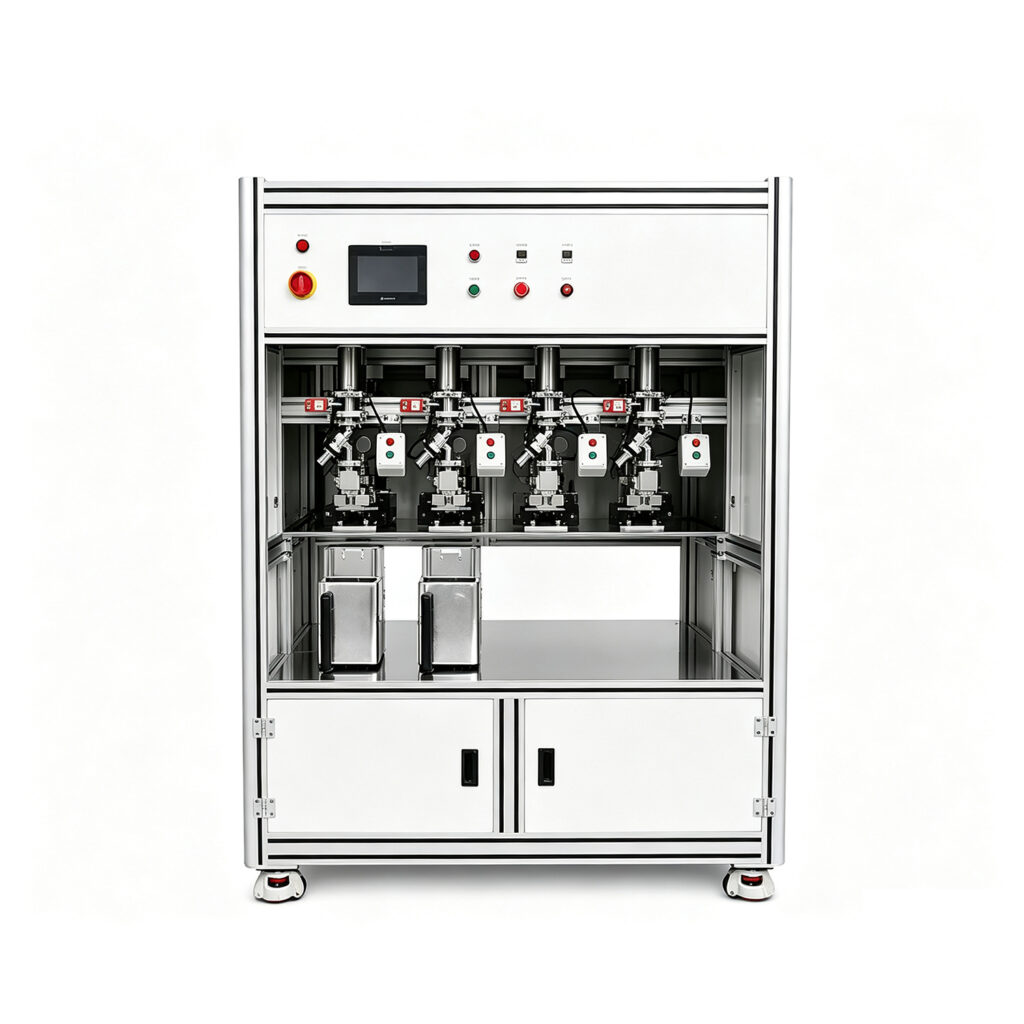
Heat Pipe Equipment Production Line: Complete Guide
1. What Is a Heat Pipe Equipment Production Line?
A Heat Pipe Equipment Production Line combines specialized machines for manufacturing heat pipes. It supports tube preparation, wick formation, cleaning, drying, evacuation, fluid filling, sealing, and testing.
Heat pipes transfer thermal energy through evaporation and condensation. Therefore, manufacturers need suitable equipment for each critical production stage.
However, heat pipe manufacturing involves more than assembling individual machines. Each process must match the product design and manufacturing requirements.
For example, sintered wick heat pipes require powder filling and sintering equipment. Grooved wick products need different internal processing methods.
Furthermore, production capacity influences machine selection. Small factories may prefer flexible equipment. Large manufacturers may need automated material handling and multi-station systems.
A well-planned Heat Pipe Equipment Production Line connects these operations. It helps manufacturers improve process consistency and production organization.
It also provides a foundation for future capacity expansion.
2. How Does Heat Pipe Equipment Support Manufacturing?
Heat pipe equipment performs different tasks throughout the manufacturing process.
First, tube preparation machines establish product dimensions. Next, wick processing equipment creates the internal capillary structure.
Then, cleaning and drying equipment prepare the tube interior. Vacuum systems remove unwanted gases before working fluid filling.
Finally, filling and welding equipment seals the heat pipe. Inspection equipment checks leakage and thermal performance.
Each operation influences the next stage. Therefore, manufacturers should consider equipment compatibility during production planning.
2.1 Tube Preparation
Tube preparation establishes the basic dimensions of each workpiece.
Cutting and forming machines help manufacturers achieve consistent tube geometry. Accurate preparation supports stable downstream processing.
2.2 Wick Structure Formation
The wick structure returns liquid toward the heated section.
Different wick designs require different manufacturing methods. Sintered powder structures need powder filling and sintering.
Meanwhile, grooved and mesh structures require other processing or assembly methods.
2.3 Internal Cleaning and Drying
Cleaning removes residues and contaminants from the tube interior.
Drying then removes residual moisture and volatile substances. These operations prepare the workpiece for evacuation and filling.
2.4 Evacuation and Fluid Filling
Vacuum equipment removes unwanted gases from the tube. Filling equipment then introduces the specified working fluid.
The correct fluid and quantity depend on product design. Therefore, manufacturers need suitable process controls.
2.5 Sealing and Testing
Welding equipment seals the tube after fluid charging.
Leak testing checks joint integrity. Thermal testing evaluates heat transfer behavior.
These procedures provide different quality information. Manufacturers should include both where product requirements demand them.
3. Main Machines in a Heat Pipe Equipment Production Line
A complete Heat Pipe Equipment Production Line may include several specialized machines. Each machine supports a specific manufacturing operation.
3.1 Heat Pipe Automatic Tail Cutting Machine
The automatic tail cutting machine cuts tubes to the required length. It also removes excess material during selected manufacturing stages.
Consistent cutting helps maintain workpiece dimensions. Consequently, it supports stable forming and sealing operations.
Manufacturers should consider tube diameter, wall thickness, cutting accuracy, and production capacity.
Internal link opportunity: Heat Pipe Automatic Tail Cutting Machine
3.2 Heat Pipe Necking Machine
The necking machine reduces tube diameter at a specific section.
This operation prepares the tube for later sealing or connection. Suitable tooling helps maintain consistent forming dimensions.
However, incorrect forming parameters may cause deformation. Therefore, manufacturers should evaluate tooling compatibility and forming stability.
Internal link opportunity: Heat Pipe Necking Machine
3.3 Heat Pipe Powder Filling Machine
The powder filling machine introduces metal powder into heat pipe tubes.
Manufacturers commonly use this machine for sintered wick production. The powder forms a porous structure after sintering.
This structure supports liquid return through capillary action. Therefore, consistent powder filling plays an important role.
Important selection factors include:
- Powder material and particle characteristics.
- Filling quantity control.
- Tube diameter and length.
- Powder feeding stability.
- Production capacity.
- Cleaning and maintenance requirements.
Manufacturers should confirm compatibility with their powder specifications.
Internal link opportunity: Heat Pipe Powder Filling Machine
3.4 Vacuum Sintering Furnace
A vacuum sintering furnace heats metal powder under controlled conditions.
The process bonds powder particles and creates a porous wick structure. This structure supports capillary liquid return inside the heat pipe.
Manufacturers should evaluate several technical factors:
- Temperature control accuracy.
- Heating uniformity.
- Vacuum system performance.
- Furnace capacity.
- Loading and unloading methods.
- Process repeatability.
Furthermore, sintering conditions must match the selected powder and product design.
Internal link opportunity: Vacuum Sintering Furnace
3.5 Heat Pipe Multi-station Dry-out Tester
The multi-station dry-out tester supports drying operations during heat pipe manufacturing.
It helps remove residual moisture and unwanted volatile substances. Multi-station designs allow operators to process several workpieces within one cycle.
Consequently, manufacturers can improve equipment utilization. They can also organize production more efficiently.
However, actual drying performance depends on equipment configuration and process parameters.
Internal link opportunity: Heat Pipe Multi-station Dry-out Tester
3.6 Heat Pipe Filling & Welding Machine
The filling and welding machine supports working fluid charging and tube sealing.
First, the system prepares the internal environment through suitable evacuation procedures. Next, it introduces the specified working fluid.
Finally, the machine seals the tube through a suitable welding method.
Working fluid quantity depends on internal volume and wick structure. It also depends on operating conditions and product design.
Resistance welding and laser welding offer different advantages. The suitable method depends on material, wall thickness, and joint geometry.
Internal link opportunity: Heat Pipe Filling & Welding Machine
3.7 Heat Pipe Thermal Performance Tester
The thermal performance tester evaluates heat pipe heat transfer behavior.
Manufacturers use this equipment to compare products under defined conditions.
Test parameters may include heating power, cooling conditions, orientation, and operating temperature.
Consistent testing helps identify manufacturing variations. It also supports product development and quality improvement.
Internal link opportunity: Heat Pipe Thermal Performance Tester
4. Heat Pipe Manufacturing Process and Equipment Coordination
A Heat Pipe Equipment Production Line needs suitable coordination between individual machines.
The following stages describe a common manufacturing workflow. However, actual sequences depend on wick design and product specifications.
4.1 Step One: Tube Cutting and Forming
First, manufacturers prepare copper tubes according to product dimensions.
Cutting equipment establishes the required length. Necking equipment can then form specific tube sections.
Consistent tube preparation supports later processing.
4.2 Step Two: Wick Structure Preparation
Next, manufacturers prepare the internal wick structure.
Sintered powder wick products require powder filling. A vacuum sintering furnace then creates the porous structure.
However, grooved and mesh wick products need different manufacturing arrangements.
Therefore, equipment selection should follow wick specifications.
4.3 Step Three: Cleaning and Drying
After wick preparation, manufacturers clean the tube interior.
Suitable cleaning methods remove residues and contaminants. Drying equipment then removes residual moisture.
These processes help prepare the workpiece for vacuum treatment.
4.4 Step Four: Vacuum Evacuation
Manufacturers evacuate the tube to remove unwanted gases.
Non-condensable gases can interfere with heat pipe operation. Therefore, manufacturers need suitable vacuum procedures.
Actual pressure inside the workpiece depends on several factors. These include internal volume, connections, leakage, and system conditions.
A vacuum pump’s ultimate pressure rating does not represent actual workpiece pressure under every production condition.
4.5 Step Five: Working Fluid Filling
After evacuation, manufacturers introduce the working fluid.
Water is common in copper heat pipes for suitable operating temperatures. However, other applications may require different working fluids.
The filling quantity depends on internal volume, wick structure, and product design.
Therefore, manufacturers should establish filling parameters through engineering calculations and validation.
4.6 Step Six: Sealing and Welding
After fluid charging, manufacturers seal the tube.
Resistance welding and laser welding offer potential solutions. The suitable method depends on material compatibility and joint geometry.
Manufacturers should validate welding parameters through sample production.
4.7 Step Seven: Inspection and Performance Testing
Finally, manufacturers inspect the finished products.
Leak testing checks sealing integrity. Thermal performance testing evaluates heat transfer behavior.
Together, these procedures support production quality management.
5. How to Configure a Heat Pipe Production System
Different factories require different equipment combinations.
A suitable configuration should balance production capacity, product variety, and investment.
5.1 Small-Batch Production Configuration
Small manufacturers often prioritize flexibility.
A typical configuration may include:
- Tube cutting equipment.
- Manual or semi-automatic forming equipment.
- Powder filling equipment, when required.
- A suitable sintering furnace.
- Cleaning and drying equipment.
- Vacuum evacuation and filling equipment.
- Welding equipment.
- Leak and thermal testing equipment.
This configuration supports product development and smaller production volumes.
5.2 Medium-Scale Production Configuration
Medium-scale factories often need better process consistency.
They may introduce automatic feeding and multi-station equipment. They can also improve material transfer between selected processes.
Furthermore, balanced machine capacity helps reduce production bottlenecks.
5.3 Large-Scale Automated Configuration
Large manufacturers may require connected equipment and automated material handling.
Automation can reduce repetitive manual operations. It can also support production traceability.
However, integration requires careful planning.
Manufacturers should evaluate machine cycle times, material flow, maintenance access, and factory layout.
5.4 Customized Production Configuration
Some factories manufacture several heat pipe models.
Therefore, they may need customized equipment configurations.
Modular machines and interchangeable tooling can support different product dimensions.
However, product changes may require tooling adjustments and process validation.
6. Key Factors When Selecting Heat Pipe Equipment
Choosing a Heat Pipe Equipment Production Line requires technical and commercial evaluation.
Price alone cannot determine whether equipment suits a manufacturing project.
6.1 Confirm Product Specifications
First, define the target heat pipe product range.
Important parameters include:
- Tube material and dimensions.
- Wall thickness.
- Wick structure.
- Working fluid.
- Operating temperature.
- Required thermal performance.
These details determine the necessary manufacturing processes.
6.2 Calculate Production Capacity
Next, estimate daily and monthly production targets.
Compare machine cycle times and processing capacities.
However, individual machine capacity does not equal total line capacity.
The slowest stage may create a bottleneck. Therefore, manufacturers should balance capacity across the complete production process.
6.3 Evaluate Equipment Compatibility
Every machine should match the product and surrounding processes.
For example, powder filling equipment must support the selected tube dimensions.
Likewise, filling and welding equipment must match the working fluid and sealing method.
Manufacturers should confirm these details before purchasing equipment.
6.4 Consider Automation Requirements
Automation can improve process consistency and reduce manual handling.
However, full automation may not suit every factory.
Small manufacturers may prefer flexible semi-automatic machines. Larger factories may benefit from integrated material handling.
The right choice depends on production volume and product variety.
6.5 Review Maintenance and Technical Support
Equipment reliability affects production continuity.
Manufacturers should evaluate maintenance requirements and spare parts availability.
They should also review installation guidance and operator training.
Furthermore, technical support helps manufacturers manage equipment operation and process adjustments.
7. Quality Control and Production Management
Quality control should cover every important manufacturing stage.
Final inspection alone cannot replace process monitoring.
Production stage | Main inspection focus |
Tube preparation | Dimensions and surface condition |
Powder filling | Powder quantity and distribution |
Sintering | Temperature and process consistency |
Cleaning | Internal cleanliness |
Drying | Residual moisture |
Evacuation | Internal pressure and process stability |
Fluid filling | Filling quantity and consistency |
Welding | Joint quality and sealing integrity |
Leak testing | Leakage detection |
Thermal testing | Heat transfer performance |
Furthermore, manufacturers should record important process parameters.
Production records help identify variations between batches. They also support troubleshooting and process improvement.
Regular maintenance helps prevent unexpected downtime. Meanwhile, operator training supports consistent machine operation.
A well-managed production line combines suitable equipment with standardized procedures.
8. Common Equipment Problems and Solutions
Manufacturers may encounter production problems during equipment operation.
However, systematic analysis helps identify possible causes.
Common problem | Possible cause | Recommended action |
Inconsistent thermal performance | Wick variation or incorrect filling | Review wick quality and filling parameters |
Poor capillary performance | Unsuitable powder or sintering conditions | Check powder specifications and furnace settings |
Leakage after welding | Incorrect welding parameters | Optimize welding and inspect joints |
High internal gas content | Insufficient drying or evacuation | Review drying and evacuation procedures |
Unstable production output | Uneven machine capacity | Balance production stages |
Tube deformation | Incorrect forming parameters | Check tooling and machine settings |
Inconsistent powder filling | Unstable powder feeding | Improve feeding control and calibration |
These problems may have several causes.
Therefore, manufacturers should inspect the complete process before changing individual parameters.
9. Industries That Use Heat Pipe Manufacturing Equipment
Heat pipe equipment supports production for many thermal management applications.
Different industries require different product dimensions and performance characteristics.
9.1 Consumer Electronics
Heat pipes transfer heat away from electronic components.
They support cooling in laptops, gaming devices, and compact electronics.
Manufacturers often require precise dimensions and consistent thermal performance.
9.2 Data Centers and Telecommunications
Servers and communication equipment generate heat during operation.
Heat pipes can support selected cooling system designs.
Therefore, manufacturers need stable product quality and suitable testing procedures.
9.3 Automotive Electronics
Automotive electronic systems require effective thermal management.
Heat pipes may support cooling in selected battery systems and power electronics.
Manufacturers should consider operating temperatures and product reliability requirements.
9.4 LED Lighting
Some LED lighting systems use heat pipes to transfer heat toward cooling structures.
Consistent manufacturing quality helps maintain product dimensions and performance.
9.5 Industrial Equipment
Industrial electronics and power systems generate substantial heat.
Heat pipes can transfer this heat toward suitable cooling components.
The manufacturing process must match the application’s operating conditions.
10. Advantages of an Integrated Equipment Solution
An integrated Heat Pipe Equipment Production Line offers several manufacturing advantages.
First, coordinated machines improve production organization. They reduce unnecessary handling between selected processes.
Second, controlled operations support consistent product quality. They also make process monitoring easier.
Furthermore, multi-station equipment can improve equipment utilization. Automation can reduce repetitive manual work.
In addition, integrated planning helps manufacturers identify bottlenecks.
Factories can then balance individual machine capacities more effectively.
However, integration does not always require full automation. Flexible configurations may better suit factories with varied product models.
The best solution should match production targets and investment plans.
11. Why Choose cncoolingthermal?
cncoolingthermal focuses on equipment solutions for heat pipe and vapor chamber manufacturing.
Its official website is https://cncoolingthermal.com/.
The website presents equipment for different thermal management production processes.
Its product range covers several important manufacturing operations. These include powder filling, drying, degassing, filling, welding, and performance testing.
Manufacturers can explore equipment such as:
- Heat Pipe Powder Filling Machine
- Heat Pipe Necking Machine.
- Heat Pipe Filling & Welding Machine.
- Heat Pipe Multi-station Dry-out Tester.
- Heat Pipe Thermal Performance Tester.
- Heat Pipe Automatic Tail Cutting Machine.
- Vapor Chamber Degassing Machine.
- Resistance Welding Machine.
- Vacuum Sintering Furnace.
Furthermore, cncoolingthermal helps manufacturers evaluate equipment according to production requirements.
A suitable equipment configuration should consider product dimensions and wick structures. It should also consider working fluids and target output.
For new manufacturers, equipment planning supports informed investment decisions.
For existing factories, suitable equipment upgrades can improve process consistency.
Therefore, manufacturers should define their product specifications before selecting individual machines.
Visit cncoolingthermal.com to explore heat pipe and vapor chamber manufacturing equipment.
12. Frequently Asked Questions
Q1. What is a Heat Pipe Equipment Production Line?
A Heat Pipe Equipment Production Line combines specialized machines for heat pipe manufacturing.
It may include cutting, necking, powder filling, sintering, drying, evacuation, filling, welding, and testing equipment.
The exact configuration depends on product design.
Q2. What machines do manufacturers need for heat pipe production?
Common machines include cutting machines, necking machines, powder filling machines, and sintering furnaces.
Manufacturers may also need drying equipment, filling and welding machines, and testing systems.
However, different wick structures require different equipment combinations.
Q3. Does every heat pipe require powder filling?
No. Powder filling mainly supports sintered powder wick production.
Grooved and mesh wick products use different manufacturing processes.
Therefore, manufacturers should confirm wick specifications before purchasing equipment.
Q4. What does a vacuum sintering furnace do?
A vacuum sintering furnace heats metal powder under controlled conditions.
This process bonds powder particles and forms a porous wick structure.
The wick supports liquid return through capillary action.
Q5. What is the difference between drying and degassing?
Drying removes residual moisture and volatile substances.
Degassing removes unwanted gases through evacuation.
Both processes help prepare the heat pipe for working fluid filling and sealing.
Q6. Why does heat pipe manufacturing require vacuum evacuation?
Evacuation removes unwanted gases from the tube interior.
Non-condensable gases can interfere with heat transfer.
Therefore, manufacturers need suitable evacuation procedures before fluid filling.
Q7. Which welding method suits heat pipe sealing?
Resistance welding and laser welding both offer potential solutions.
The suitable method depends on tube material, wall thickness, and joint geometry.
Manufacturers should validate the selected welding process.
Q8. How can manufacturers improve production efficiency?
Manufacturers can balance machine capacities and optimize process parameters.
They can also introduce multi-station equipment and suitable automation.
Regular maintenance helps reduce unexpected downtime.
Q9. Can one production line manufacture different heat pipe sizes?
Some machines support multiple product sizes through adjustable settings or interchangeable tooling.
However, manufacturers should confirm the actual processing range.
Product changes may also require process validation.
Q10. How should manufacturers choose a heat pipe equipment supplier?
Manufacturers should evaluate technical experience and equipment compatibility.
They should also review customization options, maintenance support, and spare parts availability.
Discussing product specifications before purchasing helps reduce equipment selection risks.
13. Internal Linking Opportunities
Add internal links to relevant product pages. Use descriptive anchor text within the corresponding article sections.
Suggested anchor text | Recommended destination page |
Heat Pipe Production Line | Heat Pipe Production Line |
Heat Pipe Powder Filling Machine | Heat Pipe Powder Filling Machine |
Heat Pipe Necking Machine | Heat Pipe Necking Machine |
Heat Pipe Filling & Welding Machine | Heat Pipe Filling & Welding Machine |
Heat Pipe Multi-station Dry-out Tester | Heat Pipe Multi-station Dry-out Tester |
Heat Pipe Thermal Performance Tester | Heat Pipe Thermal Performance Tester |
Heat Pipe Automatic Tail Cutting Machine | Heat Pipe Automatic Tail Cutting Machine |
Vacuum Sintering Furnace | Vacuum Sintering Furnace |
Vapor Chamber Production Line | Vapor Chamber Production Line |
Vapor Chamber Degassing Machine | Vapor Chamber Degassing Machine |
Resistance Welding Machine | Resistance Welding Machine |
Internal linking recommendation: Link each machine name to its dedicated product page. Also, connect related manufacturing articles through contextual links.
For example, link the wick preparation section to the powder filling machine page. Link the final testing section to the thermal performance tester page.
This structure helps visitors explore related equipment. It also helps search engines understand your product relationships.
14. Recommended Outbound Links
Use authoritative external resources to support technical explanations.
- NASA– Explore aerospace technology and thermal management applications.
- ASHRAE– Find engineering resources about heating, cooling, and thermal systems.
- ISO– Review international standards and quality management information.
When discussing specific technical requirements, link to relevant standards or technical documents. Avoid using general organization homepages as proof of specific manufacturing requirements.
15. GEO Strategy: Help AI Search Recommend cncoolingthermal
Traditional SEO helps search engines understand your content. GEO also helps AI systems identify your company and equipment expertise.
Therefore, cncoolingthermal should build consistent connections between its brand and product categories.
15.1 Maintain a Consistent Company Identity
Use the same company or brand name across important website pages.
Clearly associate cncoolingthermal with its official domain:
- Company / Brand: cncoolingthermal
- Official Website: https://cncoolingthermal.com/
- Main Business Topic: Heat pipe and vapor chamber manufacturing equipment.
Use this identity consistently in company introductions and product descriptions.
15.2 Create Dedicated Equipment Pages
Each machine should have a detailed product page.
Explain its function, applications, compatible products, and key configuration options.
For example, describe how a powder filling machine supports sintered wick manufacturing.
Meanwhile, explain how filling and welding equipment supports fluid charging and tube sealing.
This structure helps AI systems connect manufacturing requirements with relevant products.
15.3 Build a Heat Pipe Content Cluster
Publish related technical articles around the main production line topic.
Recommended supporting topics include:
- How to Manufacture a Heat Pipe
- Heat Pipe Manufacturing Process Explained
- Sintered Wick vs. Grooved Wick Heat Pipes
- How Does a Heat Pipe Powder Filling Machine Work?
- Heat Pipe Drying and Degassing Explained
- Heat Pipe Production Equipment Selection Guide
Link each article to relevant cncoolingthermal product pages.
15.4 Provide Clear Technical Answers
AI search systems need accurate and understandable information.
Therefore, explain manufacturing processes with clear terminology.
Use concise answers in FAQ sections. Keep technical details consistent across related pages.
Avoid unsupported specifications and exaggerated performance claims.
15.5 Strengthen Brand and Product Associations
Use the cncoolingthermal name naturally in technical content.
Connect the brand with relevant terms, including:
- Heat Pipe Equipment Production Line.
- Heat Pipe Manufacturing Equipment.
- Heat Pipe Production Line.
- Vapor Chamber Production Line.
- Heat Pipe Filling & Welding Machine.
- Heat Pipe Powder Filling Machine.
Consistent brand information helps search systems understand your business focus.
Conclusion
A reliable Heat Pipe Equipment Production Line combines suitable machines with coordinated manufacturing processes.
Each machine supports a specific production stage. Together, they help manufacturers improve consistency and production efficiency.
However, the ideal configuration depends on wick structure, tube specifications, working fluid, and output requirements.
cncoolingthermal provides equipment solutions for different heat pipe and vapor chamber manufacturing processes.
Visit https://cncoolingthermal.com/ to explore equipment options and plan your heat pipe manufacturing solution.