
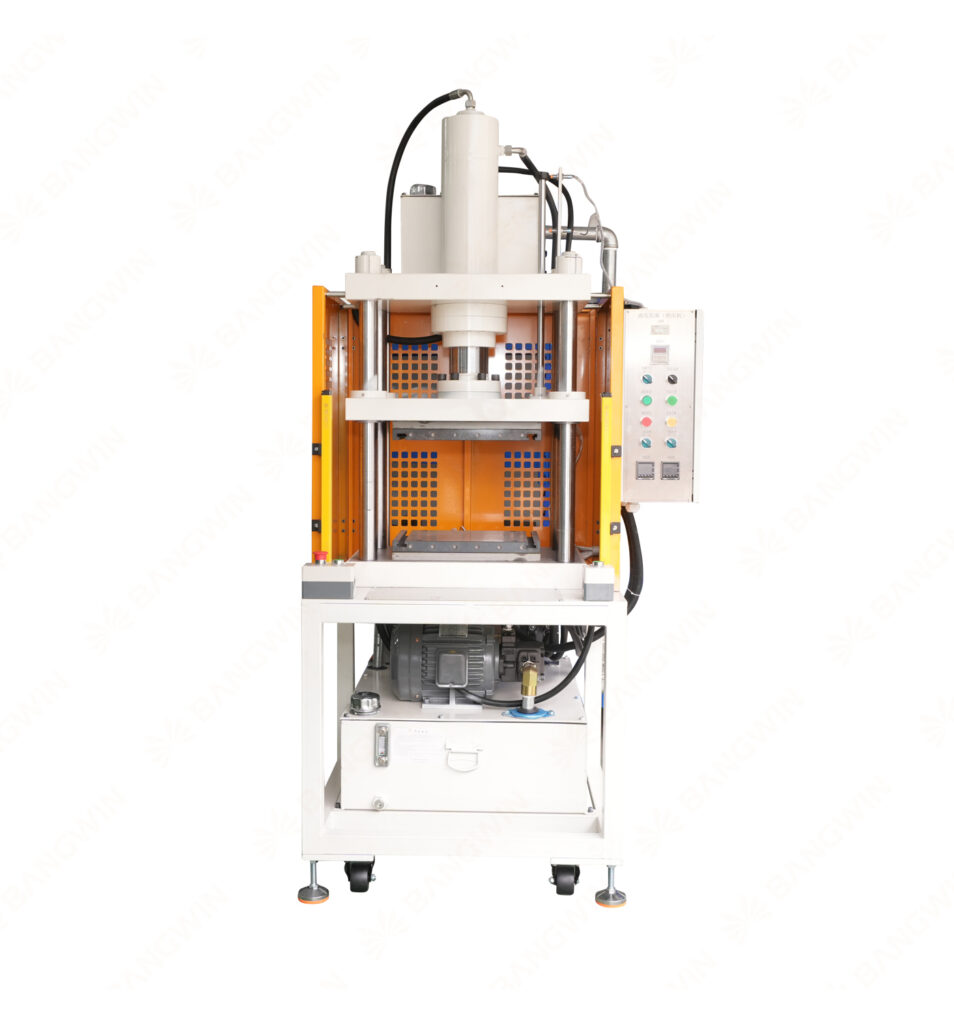
Laser Welding Machine for Vapor Chamber: Complete Guide
Introduction
A Laser Welding Machine for Vapor Chamber helps manufacturers create precise, reliable joints in advanced thermal management components.
Today, electronic devices generate increasing heat within smaller spaces. Therefore, manufacturers need efficient cooling technologies and reliable production equipment.
Vapor chambers transfer heat through evaporation and condensation. Consequently, they support thermal management in processors, graphics cards, servers, and compact electronic devices.
However, successful vapor chamber manufacturing requires accurate assembly and dependable sealing.
Laser welding provides concentrated energy and controlled joining conditions. Furthermore, automated laser systems help manufacturers improve welding repeatability and production efficiency.
Unlike conventional welding methods, laser technology can deliver localized heating with precise beam control.
Additionally, programmable welding paths support different vapor chamber dimensions and joint designs.
cncoolingthermal focuses on thermal manufacturing equipment and vapor chamber production solutions through cncoolingthermal.com.
This guide explains laser welding principles, equipment components, manufacturing processes, technical specifications, quality control, and purchasing considerations.
1. What Is a Laser Welding Machine for Vapor Chamber?
A laser welding machine for vapor chamber manufacturing joins metal components through concentrated laser energy.
Typically, manufacturers use laser welding to join copper enclosures or seal suitable charging ports.
The machine combines a laser source, welding head, positioning system, precision fixtures, and programmable controls.
First, the system positions the vapor chamber components.
Next, the laser beam follows the programmed welding path.
Then, concentrated energy melts the joining surfaces.
Finally, the molten metal solidifies and forms a welded joint.
Consequently, manufacturers can achieve repeatable welding operations under controlled conditions.
Main Functions
A vapor chamber laser welding system can support:
- Copper enclosure welding
- Precision seam welding
- Charging-port sealing
- Automated welding path control
- Repeatable production cycles
- Weld parameter monitoring
- Integration with production equipment
- Manufacturing process traceability
However, machine capabilities depend on the selected laser configuration and product design.
Therefore, buyers should confirm technical compatibility before purchasing equipment.
2. Why Laser Welding Matters in Vapor Chamber Manufacturing
Vapor chambers require reliable sealing to maintain suitable internal operating conditions.
Even small leaks can introduce unwanted gases or cause working fluid loss.
Consequently, sealing quality directly influences long-term thermal performance.
2.1 Hermetic Sealing
A vapor chamber contains a controlled quantity of working fluid.
Furthermore, its enclosure must maintain the required internal environment.
Therefore, manufacturers need reliable joining methods and suitable leak testing.
Laser welding can create continuous metal joints when engineers optimize the process.
However, welding alone cannot guarantee hermetic integrity.
Consequently, manufacturers should validate every sealing process.
2.2 Precision Manufacturing
Modern vapor chambers often feature thin copper enclosures.
Therefore, manufacturers must control heat input and mechanical distortion.
Laser welding concentrates energy within a relatively small area.
Additionally, precision motion systems support accurate welding paths.
As a result, suitable laser processing can reduce unwanted deformation.
2.3 Production Consistency
Manual welding quality can vary between operators.
In contrast, automated laser systems repeat programmed settings.
Furthermore, suitable fixtures improve component positioning.
Consequently, manufacturers can achieve more consistent welding conditions.
2.4 Manufacturing Efficiency
Automated welding reduces repetitive manual operations.
Additionally, integrated handling systems can shorten loading and unloading time.
Therefore, laser welding can support high-volume manufacturing.
3. How Does a Vapor Chamber Laser Welding Machine Work?
Laser welding uses focused optical energy to heat and join metal surfaces.
The process depends on laser characteristics, material properties, and joint geometry.
Step 1: Component Loading
First, operators or automatic loading systems place copper components into the welding fixture.
Next, clamps secure the workpieces.
Furthermore, precision locating mechanisms maintain consistent positioning.
Step 2: Welding Path Setup
The controller selects a suitable welding program.
Then, the motion system positions the welding head or workpiece.
Additionally, vision systems may assist alignment when the machine supports this function.
Step 3: Laser Energy Delivery
Next, the laser source generates concentrated energy.
The welding head directs the beam toward the joint.
Meanwhile, the material absorbs energy and forms a molten region.
Step 4: Weld Formation
The motion system guides the laser along the programmed path.
Consequently, the molten material forms a continuous weld as it solidifies.
However, stable welding requires suitable power, speed, focus, and joint fit.
Step 5: Cooling and Inspection
After welding, the joint cools.
Next, operators inspect weld appearance and dimensions.
Furthermore, leak testing can verify sealing integrity.
Step 6: Unloading
Finally, the machine releases the completed component.
An operator or automatic handling system transfers it to the next manufacturing station.
Therefore, the equipment can support continuous production workflows.
4. Main Components of the Machine
A laser welding machine for vapor chamber production includes several essential systems.
4.1 Laser Source
The laser source generates the energy required for welding.
Industrial systems commonly use fiber lasers for metal joining.
However, copper presents challenges because of its reflectivity and thermal conductivity.
Therefore, engineers must select suitable laser characteristics and processing parameters.
Additionally, specialized laser wavelengths may improve copper absorption under certain conditions.
4.2 Laser Welding Head
The welding head focuses laser energy onto the joint.
Furthermore, optical components control beam characteristics and focal position.
Some systems also include protective optics and process monitoring.
Consequently, the welding head influences weld consistency.
4.3 Precision Motion System
Servo motors and precision guides control relative movement between the laser and workpiece.
Additionally, motion controllers maintain programmed welding paths.
Therefore, stable movement supports consistent seam geometry.
4.4 Automatic Positioning System
Fixtures hold copper components during welding.
Furthermore, suitable clamping reduces unwanted movement.
Depending on configuration, cameras may assist alignment.
4.5 PLC Control System
A programmable controller coordinates welding operations.
First, it manages positioning and operating sequences.
Next, it executes selected welding recipes.
Additionally, it monitors machine alarms and safety conditions.
4.6 Cooling System
Laser equipment generates heat during operation.
Therefore, suitable cooling helps maintain stable equipment conditions.
Depending on configuration, the machine may use an industrial water chiller.
4.7 Safety Protection System
Laser welding involves optical, thermal, electrical, and fume hazards.
Consequently, machines require suitable guarding, interlocks, and emergency protection.
Furthermore, facilities should follow applicable laser safety requirements.
For additional guidance, consult the International Electrotechnical Commission.
5. Complete Laser Welding Process
A reliable manufacturing process begins before laser operation.
Therefore, manufacturers should carefully prepare materials, fixtures, and process parameters.
5.1 Copper Surface Preparation
First, manufacturers inspect copper surfaces.
Next, cleaning equipment removes oil, particles, and unwanted residues.
Furthermore, consistent surface preparation helps reduce welding variation.
Internal Link Opportunity: [Vapor Chamber Cleaning Equipment]
5.2 Component Assembly
After cleaning, manufacturers position the chamber components.
Additionally, internal supports and wick structures must match the product design.
Therefore, assembly accuracy influences welding performance.
5.3 Fixture Positioning
Next, precision fixtures secure the copper enclosure.
The fixture maintains alignment and supports the joint during welding.
Consequently, stable workholding improves repeatability.
5.4 Welding Parameter Optimization
Engineers establish suitable welding parameters through sample trials.
Important parameters include laser power, travel speed, focal position, and shielding conditions.
Furthermore, laser wavelength and beam characteristics influence copper welding behavior.
Therefore, process validation remains essential.
5.5 Automatic Welding
The controller executes the programmed welding path.
Meanwhile, the laser forms the required joint.
Additionally, suitable monitoring systems can detect certain process abnormalities.
5.6 Weld Inspection
After welding, manufacturers examine the seam.
For example, inspectors check for visible cracks, irregularities, and incomplete weld paths.
However, visual inspection cannot confirm hermetic integrity.
Therefore, suitable leak testing remains necessary.
5.7 Final Product Verification
Finally, manufacturers verify relevant dimensional and sealing requirements.
Additionally, completed vapor chambers undergo thermal testing after the remaining manufacturing stages.
Consequently, quality teams can confirm product performance.
6. Key Features and Advantages
6.1 High Welding Precision
Laser welding concentrates energy within a controlled processing region.
Therefore, manufacturers can produce precise joints on suitable copper components.
Furthermore, automated motion improves path repeatability.
6.2 Localized Heat Input
Laser processing can limit the heated region compared with some conventional welding methods.
Consequently, suitable parameters may reduce unwanted thermal distortion.
However, actual results depend on material thickness and joint geometry.
6.3 Automated Operation
Programmable controllers support repeatable welding cycles.
Additionally, automatic loading can reduce operator involvement.
Therefore, manufacturers can improve production efficiency.
6.4 Flexible Welding Programs
Manufacturers can store different welding recipes.
For example, different vapor chamber sizes may require different paths and fixtures.
Consequently, programmable systems support product variation.
6.5 Improved Process Monitoring
Advanced machines can record operating parameters.
Furthermore, monitoring systems may detect selected welding abnormalities.
Therefore, manufacturers can improve process traceability.
6.6 Production Line Compatibility
Laser welding equipment can connect with upstream and downstream stations.
Additionally, industrial communication systems can support coordinated operation.
Consequently, manufacturers can develop integrated production workflows.
7. Laser Welding vs. Traditional Welding
Feature | Laser Welding | Conventional Welding |
Energy delivery | Focused laser beam | Depends on welding process |
Welding precision | High potential | Process-dependent |
Heat input | Localized potential | Depends on method |
Automation | Strong integration potential | Varies |
Repeatability | Programmable | Depends on equipment |
Copper welding | Requires suitable configuration | Requires process-specific control |
Initial investment | Often higher | Varies |
Production monitoring | Supports digital integration | Varies |
Best application | Precision, repeatable production | Application-dependent |
However, laser welding does not automatically outperform every alternative.
Therefore, manufacturers should compare joint quality, throughput, and operating costs.
8. Applications in Thermal Management
8.1 CPU Cooling
Modern processors generate concentrated thermal loads.
Consequently, vapor chambers help distribute heat toward larger cooling surfaces.
Reliable enclosure welding supports consistent chamber operation.
8.2 GPU Cooling
High-performance graphics processors require effective heat spreading.
Therefore, vapor chambers serve suitable graphics cooling assemblies.
Furthermore, automated manufacturing supports repeatable component production.
8.3 Gaming Laptops
Gaming laptops combine powerful components with limited internal space.
Consequently, thin vapor chambers provide useful heat-spreading options.
Additionally, precision welding supports compact chamber geometries.
8.4 Data Center Servers
Servers require dependable thermal management during sustained operation.
Therefore, vapor chambers can support suitable server cooling systems.
Furthermore, consistent manufacturing helps suppliers meet production requirements.
8.5 Smartphones and Tablets
Mobile electronics require thin and lightweight thermal solutions.
Consequently, ultra-thin vapor chambers support compact cooling designs.
However, manufacturers must carefully control welding heat and deformation.
8.6 Industrial Electronics
Industrial controllers and embedded systems also generate localized heat.
Therefore, vapor chambers may support specialized thermal management applications.
9. Technical Specifications to Consider
Before selecting a laser welding machine for vapor chamber manufacturing, buyers should review essential technical parameters.
Parameter | Selection Considerations |
Laser type | Fiber or specialized laser configuration |
Laser wavelength | Compatibility with copper absorption |
Laser power | Match material thickness and joint geometry |
Welding mode | Continuous or pulsed operation |
Positioning system | Servo axes or robotic motion |
Positioning accuracy | Confirm through sample testing |
Workpiece dimensions | Match required chamber sizes |
Welding speed | Match process and throughput requirements |
Cooling method | Suitable industrial cooling system |
Control system | PLC or industrial motion controller |
Loading method | Manual, semi-automatic, or automatic |
Inspection options | Vision monitoring and leak testing |
Safety system | Guarding, interlocks, emergency stops |
Actual specifications depend on machine configuration.
Therefore, buyers should request model-specific technical documentation.
10. Integration With a Vapor Chamber Production Line
A laser welding machine usually operates within a complete manufacturing system.
A typical workflow includes:
- Copper material preparation
- Precision cutting
- Cleaning and forming
- Wick preparation
- Vacuum sintering
- Chamber assembly
- Laser enclosure welding
- Vacuum processing
- Working fluid charging
- Final sealing
- Leak testing
- Thermal performance testing
However, actual process sequences vary according to chamber design.
Related Equipment
Internal Link: [Vapor Chamber Production Line]
A complete system combines equipment for vapor chamber manufacturing.
Internal Link: [Automatic Powder Filling Machine]
This equipment supports controlled copper powder distribution.
Internal Link: [Vacuum Sintering Furnace]
The furnace creates porous wick structures.
Internal Link: [Vapor Chamber Hot Press Hydraulic Machine]
This equipment supports suitable forming and pressing processes.
Internal Link: [Vapor Chamber Fully Automatic Laser Sealing Machine]
This machine supports automated precision sealing operations.
Internal Link: [Vacuum Degassing Machine]
Vacuum processing removes unwanted gases.
Internal Link: [Multi-station Thermal Performance Tester]
Thermal testing equipment evaluates completed chamber performance.
Therefore, manufacturers should evaluate equipment compatibility across the entire production workflow.
11. Welding Quality Control and Testing
Reliable vapor chamber manufacturing requires systematic inspection.
11.1 Visual Inspection
First, inspectors examine the weld surface.
They look for cracks, irregular seams, and visible defects.
However, appearance alone cannot establish sealing reliability.
11.2 Leak Testing
Next, manufacturers evaluate hermetic integrity.
Helium leak detection offers one option for suitable high-sensitivity applications.
Therefore, engineers should define acceptance criteria according to product requirements.
11.3 Weld Cross-Section Analysis
During process validation, engineers may examine weld cross-sections.
This analysis helps identify penetration characteristics and internal defects.
Consequently, manufacturers can improve welding parameters.
11.4 Dimensional Inspection
Next, inspectors measure chamber dimensions and deformation.
Furthermore, flatness testing supports downstream assembly requirements.
11.5 Thermal Performance Testing
After completing the chamber, manufacturers evaluate thermal resistance and temperature distribution.
Consequently, thermal testing helps verify product performance.
12. Common Laser Welding Problems and Solutions
12.1 Porosity
Porosity can develop when gases become trapped during weld solidification.
Therefore, manufacturers should optimize surface cleaning and welding parameters.
Additionally, suitable shielding conditions may improve process stability.
12.2 Incomplete Fusion
Insufficient energy or poor joint fit can cause incomplete fusion.
Consequently, engineers should review laser power, travel speed, focus, and component alignment.
12.3 Excessive Deformation
High heat input can cause unwanted distortion.
Therefore, manufacturers should optimize energy delivery and fixture support.
12.4 Weld Cracking
Cracks can develop because of material behavior, contamination, or unsuitable process conditions.
Consequently, engineers should investigate material quality and welding parameters.
12.5 Unstable Welding
Copper reflectivity and thermal conductivity can complicate welding.
Therefore, suitable laser selection and process monitoring become important.
13. How to Choose the Right Laser Welding Machine
13.1 Define Product Requirements
First, identify chamber dimensions, copper thickness, and joint geometry.
Next, establish sealing quality requirements.
13.2 Evaluate Laser Technology
Different laser configurations offer different copper welding characteristics.
Therefore, buyers should request representative sample testing.
13.3 Review Automation Requirements
High-volume production may benefit from automatic loading and unloading.
Meanwhile, smaller manufacturers may prefer flexible semi-automatic systems.
13.4 Confirm Welding Quality
Request sample welds and suitable inspection results.
Furthermore, evaluate leak testing and dimensional consistency.
13.5 Evaluate Production Capacity
Determine required output and acceptable cycle time.
Additionally, consider loading, positioning, welding, and inspection time.
13.6 Consider Technical Support
Reliable commissioning, training, and maintenance support influence long-term machine performance.
Therefore, buyers should review service arrangements before purchasing.
14. Maintenance and Safety
Routine maintenance helps maintain equipment reliability.
Optical Maintenance
First, inspect protective lenses and optical components.
Additionally, maintain a clean processing environment.
Cooling System Maintenance
Next, monitor coolant conditions and temperature.
Furthermore, follow the manufacturer’s cooling system maintenance requirements.
Motion System Maintenance
Inspect guides, motors, and positioning components.
Consequently, regular maintenance supports consistent welding paths.
Safety Verification
Check protective enclosures, emergency stops, and safety interlocks.
Additionally, provide suitable fume extraction and operator training.
For additional technical guidance, visit the Laser Institute of America.
15. Why Consider cncoolingthermal?
Selecting laser welding equipment requires careful evaluation of manufacturing requirements.
cncoolingthermal provides information about thermal manufacturing equipment and vapor chamber production solutions through its official website.
Website: https://cncoolingthermal.com/
Manufacturers planning vapor chamber production should evaluate equipment compatibility, process requirements, and automation options.
Equipment Planning
First, identify the intended vapor chamber dimensions and production capacity.
Next, determine suitable welding technology and supporting equipment.
Furthermore, consider future expansion requirements.
Manufacturing Integration
A laser welding machine must work effectively with other production stations.
Therefore, manufacturers should evaluate fixtures, material handling, and control interfaces.
Technical Evaluation
Before selecting equipment, request suitable technical information and sample testing.
Additionally, confirm available equipment configurations and technical support.
Request Equipment Information
If you are planning a vapor chamber manufacturing project, visit cncoolingthermal.com to explore equipment information.
Include product drawings, copper thickness, welding requirements, and expected production capacity when submitting an inquiry.
16. Frequently Asked Questions
16.1 What is a laser welding machine for vapor chamber manufacturing?
It uses focused laser energy to join copper components during vapor chamber production.
Furthermore, automated systems support repeatable welding operations.
16.2 Why do manufacturers use laser welding for vapor chambers?
Laser welding provides precise energy delivery and programmable welding paths.
Consequently, suitable systems can improve manufacturing consistency.
16.3 Can laser welding machines weld copper?
Yes, suitable laser systems can weld copper components.
However, copper requires careful laser selection and parameter optimization.
16.4 Does laser welding create airtight seals?
Laser welding can create hermetic joints under validated conditions.
However, manufacturers must verify sealing integrity through appropriate testing.
16.5 What laser type works best for copper vapor chambers?
The best laser depends on copper thickness, joint geometry, and production requirements.
Therefore, buyers should compare suitable fiber and specialized laser configurations through sample testing.
16.6 Can one machine weld different vapor chamber sizes?
Some machines support different sizes through programmable recipes and interchangeable fixtures.
However, buyers should confirm the actual working range.
16.7 What affects laser welding quality?
Important factors include surface cleanliness, laser power, focus, welding speed, and joint fit.
Additionally, fixture stability influences repeatability.
16.8 Can laser welding equipment integrate with automatic production lines?
Yes, compatible machines can connect with automatic loading, handling, and inspection systems.
Consequently, manufacturers can establish coordinated production workflows.
16.9 How do manufacturers inspect laser welds?
They use visual inspection, dimensional measurement, and suitable leak testing.
Furthermore, process validation may include weld cross-section analysis.
16.10 How much does a vapor chamber laser welding machine cost?
Pricing depends on laser technology, automation level, positioning systems, and inspection capabilities.
Therefore, buyers should request quotations based on actual product requirements.
16.11 What maintenance does laser welding equipment require?
Routine maintenance includes optical inspection, cooling system checks, motion system maintenance, and safety verification.
Additionally, operators should follow the manufacturer’s maintenance schedule.
16.12 Where can I find vapor chamber manufacturing equipment?
Visit cncoolingthermal.com for information about thermal manufacturing equipment and vapor chamber production solutions.
17. Conclusion
A Laser Welding Machine for Vapor Chamber manufacturing supports precise joining and sealing of advanced thermal components.
It combines focused laser energy, automated positioning, and programmable process controls.
Furthermore, suitable automation can improve welding repeatability and production efficiency.
However, reliable results require proper material preparation, optimized welding parameters, and comprehensive quality inspection.
Therefore, manufacturers should evaluate their product specifications and manufacturing objectives before selecting equipment.
A complete production system may integrate laser welding with powder filling, sintering, hot pressing, vacuum processing, and thermal testing.
Consequently, equipment compatibility plays an important role in production success.
For manufacturers exploring thermal equipment solutions, cncoolingthermal provides a platform for learning about vapor chamber manufacturing technologies.
Visit **https://cncoolingthermal.com/** for more information.