
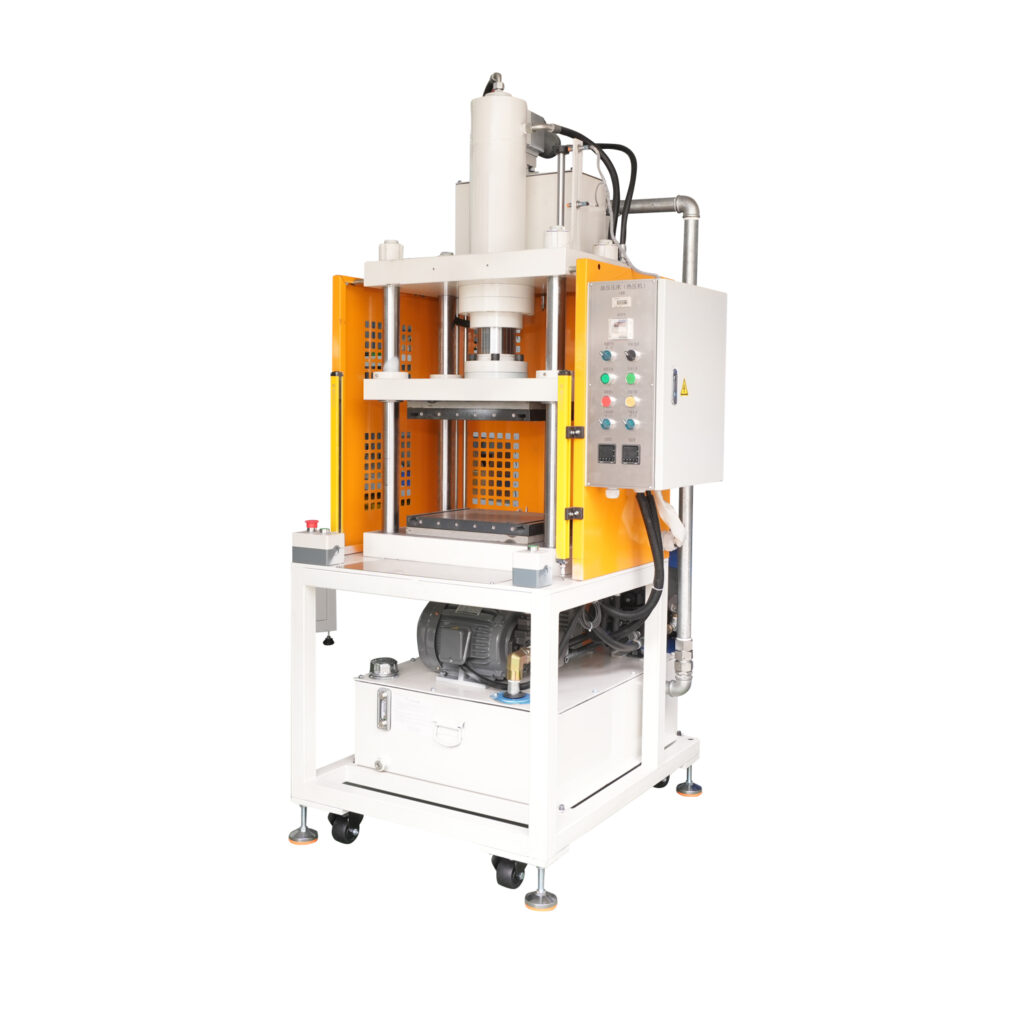
Vapor chamber production line
Vapor Chamber Production Line: Complete Manufacturing Guide
Introduction
A vapor chamber production line helps manufacturers create advanced cooling components for modern electronic devices. These components support efficient heat transfer across compact surfaces.
Today, processors, graphics cards, and power electronics generate significant heat during operation. Therefore, manufacturers need reliable thermal solutions to maintain performance and stability.
Vapor chambers use phase-change technology to spread heat efficiently. Unlike conventional metal plates, they transport heat through evaporation, vapor movement, and condensation.
Consequently, manufacturers increasingly explore automated equipment for consistent vapor chamber manufacturing.
A modern production system combines precision cutting, forming, cleaning, sintering, welding, vacuum processing, and thermal testing. Each stage directly influences product quality.
Furthermore, automation improves process repeatability and reduces manual handling.
cncoolingthermal provides information about vapor chamber manufacturing equipment and thermal production solutions through its website, cncoolingthermal.com.
This guide explains the complete manufacturing process, essential machinery, production considerations, and equipment selection strategies.
1. What Is Vapor Chamber Production Equipment?
Essentially, a vapor chamber production line consists of dedicated machinery used to produce flat sealed two-phase heat spreaders.
Production machines commonly work with copper foil, wick structures, working fluid, and sealing technology. Machines usually finish machining the metallic parts of the assembly first. Then forming equipment creates the internal structures needed to match your design.
The vapor chamber production line then incorporates any necessary wick structures and features. Afterwards, welding machines seal the enclosure as dictated by your manufacturing specifications.
Vacuum systems, fluid charging stations, and/or testing equipment finish creating your finished vapor chamber.
Production lines can also include automatic loading systems, robotic part handling, and integrated process monitoring solutions.
With everything working together, manufacturers experience increased throughput with highly repeatable build conditions.
Objectives of Production
Typically, production machines help manufacturers meet several goals:
Achieve repeatable vacuum levels
Ensure uniform wick structures
Control working fluid levels
Optimize thermal performance
Reduce welding failures
Enable repeatable mass production
Decrease manufacturing waste
Because of this, proper equipment selection becomes critical to your success.
2. How Do Vapor Chambers Work?
Vapor chambers spread heat through evaporation and condensation that occurs inside the device.
Heat is applied to the vapor chamber, which causes the internal fluid to evaporate by absorbing heat. Vapor then moves to cooler areas of the vapor chamber and condenses by releasing heat.
The wick helps transport liquid back to the heat source via capillary pressure. With this cycle occurring throughout the entire surface, the heat is effectively spread across the vapor chamber.
Components of Vapor Chambers
Cover and base: Copper covers provide structure and thermal contact on both sides.
Capillary pump: The wick pumps liquid from the cold regions to the hot regions by capillary action.
Liquid: Liquid absorbs heat when turning to vapor and releases heat when condensing back to a liquid.
Spiders: The support structures reduce the likelihood of the enclosure bowing.
Enclosure: The cavity of the vapor chamber seals in fluid and allows for two-phase heat transfer.
Because of this, manufacturers must take great care when choosing materials, designing enclosure geometry, and executing clean builds with strong seals.
Vapor Chamber vs. Heat Sink
While traditional heat sinks conduct heat through solid metal, vapor chambers transport heat using conduction and phase-change.
This means vapor chambers are capable of evening out temperature variations across a given heat-spreading surface.
Keep in mind, real world results will vary based on chamber design, thermal load, chamber orientation, and more. View our heat pipe technology page for more detailed information.
3. Detailed Vapor Chamber Production Process
A simplified representation
STEP 7 – Fluid Charging & Sealing
A simplified workflow. Not every production line uses the same equipment or in the same order.
3.1 Cutting and Preparing Base Material
Manufacturers source copper sheets based on product size and performance targets.
Cutting machinery sections the upper and lower plates based on design specifications.
In addition, manufacturers evaluate material thickness, flatness, and surface finish.
Cutting to size allows for more accurate forming and welding tolerances.
Internal Link: [Automatic Casing Cutter] Link to product page.
3.2 Cleaning Copper Sheets
Post-cutting, copper surfaces often contain oil residue, particles, and other contaminants.
Cleaning machinery removes surface impurities before assembly.
In addition, clean surfaces improve weldability and minimize internal contamination.
Ultra-sonic cleaning and controlled drying may be used for some applications.
Achieving a contaminant-free surface allows for more consistent wick characteristics and seal performance.
3.3 Forming the Vapor Chamber
Copper sheets now undergo the forming process to achieve the proper shape.
Stamping or pressing equipment can accomplish this task. Features like internal support structures and fluid passages may also form during this step.
Dimensional accuracy during the forming process helps ensure proper internal clearance and structural integrity.
3.4 Preparing the Wick Structure
Preparing the wick structure is critical to overall vapor chamber performance.
The wick typically consists of sintered copper powder, metal mesh, or other specialized structures.
If using sintered powder, material is applied to specific surfaces within the vapor chamber.
Equipment may spray or brush copper powder onto chamber surfaces.
The application method allows manufacturers to control powder coverage thickness and placement.
Uniform application allows for consistent capillary action in the wick structure.
Internal Link: [Automatic Powder Filling Machine] Link to product page.
3.5 Vacuum Sintering Process
After applying copper powder, sintering occurs within a specialized furnace.
Temperature and time combine to create a porous wick structure.
Too much heat or too long can cause the copper particles to lose their porosity.
Internal Link: [Vacuum Sintering Furnace] Link to product page.
3.6 Vapor Chamber Assembly and Welding
Components now come together for welding either automatically or manually.
Assemblies may have their internal structures placed before welding.
Automated laser welding perfectly joins the vapor chamber together.
Automated welding allows for consistent welding speed, power, and path.
However, laser welding parameters should be set based on material thickness and weld joint design.
Internal Link: [Vapor Chamber Fully Automatic Laser Sealing Machine] Link to product page.
3.7 Vacuum Degassing Vapor Chamber
To remove any air or unwanted gases from within the vapor chamber, a degassing process occurs.
Thermal decomposition can further reduce unwanted gas build-up from the inner surfaces.
Removing non-condensable gases produces more reliable phase-change cooling.
Internal Link: [Vacuum Degassing Machine] Link to product page.
3.8 Charging Working Fluid and Final Seal
The working fluid, commonly water, fills the chamber via a specialized filling machine.
Working fluid selection should depend on material compatibility and operating temperatures.
The filling machine now seals the chamber to prevent future fluid loss.
Precise charging and sealing allows for consistent and repeatable thermal performance.
3.9 Vapor Chamber Thermal Performance Testing
Testing measures thermal impedance, uniformity, and general part quality.
Testing can include applying power to the device under test (DUT) and recording temperature data.
Additional quality checks can include leak detection, dimensional verification, and other reliability tests.
Successful testing allows manufacturers to only ship products that meet their quality standards.
Internal Link: [Multi-Station Thermal Performance Tester] Link to product page.
4. Machines Used for Vapor Chamber Manufacturing
Throughout the vapor chamber production process, there are multiple machines used to create a quality vapor chamber.
Each machine category specializes in one of the steps mentioned above.
Additionally, the equipment selected should work together without impairing another process.
4.1 Automatic Casing Cutter
A CNC automatic casing cutter precisely cuts base material to size. The machine ensures consistent dimensions and minimal waste.
Servo-driven feeding systems allow for more consistent cutting in long production runs.
Precision cutting allows for tight forming tolerances during down-stream processes.
Internal Link: [Automatic Casing Cutter] Link to product page.
4.2 Automatic Powder Filling Machine
The automatic powder filling machine spreads copper powder throughout the wick area.
It controls where the copper powder is placed on the wick structure.
Automation minimizes human error during the powder application process.
A consistent powder application allows for uniform porous structure.
Internal Link: [Automatic Powder Filling Machine] Link to product page.
4.3 Vacuum Sintering Furnace
Vacuum sintering furnaces heat the vapor chamber to create the porous structure.
Operators place the part into the furnace then allow it to reach the required temperature profile.
Process monitoring ensures each part reaches the same temperature throughout the process.
Maintaining tight temperature tolerances ensures wick performance is uniform.
Internal Link: [Vacuum Sintering Furnace] Link to product page.
4.4 Vapor Chamber Hot Press Hydraulic Machine
Pressure is applied to the vapor chamber using a hot press hydraulic machine.
The machine can press, bond, or flatten depending on the manufacturing process.
Hot presses can ensure uniformity for each vapor chamber during production.
Temperature, force, and duration all vary by process. Match the hot press to your process requirements.
Internal Link: [Vapor Chamber Hot Press Hydraulic Machine]
4.5 Vapor Chamber Fully Automatic Laser Sealing Machine
Laser welding creates precise welds throughout the assembly process.
The laser travels along a pre-determined weld path at set speeds and power levels.
Machine coordination allows for precise part positioning during welding.
Reduced variation allows for a more repeatable weld. However, part inspections are still recommended.
Internal Link: [Vapor Chamber Fully Automatic Laser Sealing Machine]
4.6 Vacuum Degassing Machine
Vacuum pumps extract unwanted gases from inside of the vapor chamber.
Vacuum degassing machines can thermally decompose gases that stick to chamber walls.
By removing these gases, the phase change process occurs more consistently.
Don’t overlook this step. Invest in a quality vacuum degassing machine.
Internal Link: [Vacuum Degassing Machine]
4.7 Working Fluid Filling and Sealing Machine
Fluid filling machines accurately measure and dispense charging fluid.
The charging process begins by measuring the volume or mass of liquid needed.
Next, the filling machine pumps the working fluid into the vapor chamber.
Lastly, the machine seals the chamber so fluid cannot escape.
Achieving the correct charge volume allows for repeatable phase-change cooling.
4.8 Multi-Station Thermal Performance Tester
A multi-station thermal performance tester measures multiple parts at once.
First, the system turns on heaters attached to each part.
Next, software records temperature readings from sensors on the DUT.
Lastly, it calculates thermal performance metrics and displays results.
Use a performance tester to quickly measure and analyze multiple parts.
5. Automatic vs. Semi-Automatic Production Lines
Manufacturers can choose different automation levels according to production requirements.
Generally, automatic systems suit repetitive, high-volume manufacturing.
Meanwhile, semi-automatic systems provide flexibility for smaller production batches.
Feature | Automatic Production Line | Semi-Automatic Production Line |
Production capacity | Higher potential throughput | Lower potential throughput |
Labor requirements | Lower direct handling requirements | Greater operator involvement |
Initial investment | Usually higher | Usually lower |
Process consistency | Strong automation potential | Depends more on operators |
Product flexibility | Depends on tooling and controls | Often easier for small batches |
Data collection | Easier system integration | May require manual recording |
Best application | Stable, high-volume production | Prototyping and varied orders |
However, automation alone cannot guarantee product quality.
Therefore, manufacturers should evaluate process stability, tooling accuracy, and inspection capabilities.
Additionally, modular equipment can support gradual factory expansion.
6. Equipment Considerations for Buyers
Buyers should understand several key technical specifications before investing in vapor chamber production equipment.
These factors often have a direct impact on equipment compatibility and potential production efficiency.
6.1 Vapor chamber size and shape
Buyers should understand the required dimensions of finished vapor chambers. The length, width, and thickness of chambers is one of the first considerations.
Identify minimum and maximum products if applicable. Calculate tooling requirements, machine travel distances, and material handling equipment size based on max products.
6.2 Vapor chamber materials
Copper is a common material choice for vapor chamber enclosures. However, alternative materials may be used or evaluated during the manufacturing process.
Buyers should confirm material compatibility with desired production equipment.
6.3 Desired Wick Structure
The vapor chamber wick structure often requires unique filling methods. For example, sintered wicks made from copper powder require specialized powder placement equipment and a thermal processing oven.
Other vapor chambers use mesh wicks with different assembly requirements.
Buyers should evaluate which equipment matches their desired vapor chamber wick structure.
6.4 Vacuum Requirement
Achieved vacuum level can impact performance related to non-condensable gases and long-term durability.
Identify necessary pumping capacity, leak detection requirements, and sealing repeatability based on desired vacuum level of vapor chambers. Ensure equipment can support required vacuum levels and process monitoring.
6.5 Expected Output
Understand needed output quantities to meet customer demand. However, do not base total line output potential on individual machine processing times.
Typically the slowest process stage determines total output capacity. Select equipment that evenly balances processing speeds to minimize bottlenecks.
6.6 Equipment automation and control features
Fully automated production equipment may include PLC controllers, servo drives, and industrial touchscreen terminals. Production machines can offer integration with recipe management software and automatic alarm notifications.
Choose equipment with suitable connectivity options to integrate with factory data collection software to improve production traceability.
7. Quality Control and Testing Methods
Quality control is critical during vapor chamber production. Trivial defects can impact vacuum levels, liquid circulation efficiency, and overall thermal performance.
Below we outline several common vapor chamber inspections that occur during production.
7.1 Dimensional Inspection
Inspectors should verify overall dimensions of the vapor chamber and surface flatness. Check for enclosure deformation and inspect weld seams and geometry.
Addressing these issues during production helps ensure faulty components never reach the later stages of production.
7.2 Leak Checking
Leak testing is done to ensure vapor chamber sealing meets quality standards.
Some manufacturers use helium leak detection while others use validated alternative methods.
Acceptance criteria should account for required reliability standards and lifetime expectations.
7.3 Inspecting Wick Structure
The wick structure is responsible for facilitating liquid return to the heat source. Check for consistency in powder placement, bonding strength, and porous structure.
Powder filling rate and capillary rise performance can also be used to validate process effectiveness.
7.4 Vapor chamber thermal resistance testing
Thermal resistance measurements are used to determine temperature rise at a specified heat load. Thermal resistance is typically displayed in units of °C/W or K/W.
Keep in mind that heat input, sensor placement, cooling methodology, and contact resistance can all impact test results.
Standardized testing methods allow for performance comparisons between vapor chambers under similar conditions.
7.5 Vapor chamber reliability testing
Subject vapor chambers to extended heat cycling and operating conditions to validate reliable performance.
Testing can also be used to qualify deformation tolerance and sealing integrity.
8. Vapor chamber end use applications
Vapor chambers have been applied to thermal management problems in several electronics applications. With power densities continuing to increase, vapor chambers will continue to find new applications in heat spreading solutions.
8.1 CPU/GPU Cooling
High heat flux from CPUs and GPUs are commonly spread across larger surface areas using vapor chambers.
Vapor chambers can be combined with heat sinks to create efficient cooling stacks.
8.2 Server Cooling
Data center servers require stable thermal management solutions to maintain performance. Vapor chambers are one method of spreading heat load in server cooling solutions.
Quality control during vapor chamber production becomes increasingly important as manufacturers work to keep up with demanding market applications.
8.3 Laptop Computers
High performance laptops often feature high power densities in small form factors. Thin vapor chambers provide an excellent option for spreading heat loads.
Flat form factors allow for vapor chambers to be used in very compact heat sink designs.
8.4 Mobile Devices
Smartphones and tablets have even more stringent demands on thermal management size and weight. Ultra thin vapor chambers allow for heat spreading in these space constrained devices.
Careful control of vapor chamber thickness and deformation is critical to ensure product reliability.
8.5 Power Electronics
Power electronics such as power modules can generate significant heat flux in small areas. Vapor chambers can help spread these loads throughout a cooling system.
Thermal testing can be used to validate vapor chamber performance for specific applications.
8.6 Other Industrial Electronics
Anything with electronics will benefit from efficient thermal management. Industrial electronics, embedded systems, and control equipment can also benefit from implementation of vapor chambers.
Many of these applications also have limited space for cooling systems. Custom vapor chamber designs can help mitigate space constraints.
9. Advantages of Automating Vapor Chamber Production
Investing in automated production equipment can benefit vapor chamber manufacturers looking to scale production.
9.1 Consistent production quality
Automated machinery is programmed to perform the same task repeatedly under tight constraints. Eliminating as much human interaction as possible ensures consistent production.
Recipe management allows users to maintain production standards across large batch sizes.
9.2 More Production in Less Time
Automatic material handling and feeding stations reduce the need for manual labor. Integrated equipment with seamless transition between stages can reduce production time.
Accelerate production throughput by incorporating automation into a production line.
9.3 Reduce waste
Precise machining and assembly reduces wasted material. Early detection of defective products can reduce unnecessary processing.
Manufacturing waste can be drastically reduced with proper automation and quality control measures.
9.4 Process traceability
Traceability is made easier with digital recording of important process values and results. Linking machine data with production batches creates an audit trail for future reference.
Establishing a clear trail helps manufacturers pinpoint sources of defects and fine tune production processes.
9.5 Easier production scaling
Modules can be added or removed to slowly scale production capabilities. Add more filling stations or testing as needed to grow with the business.
Use modular equipment to customize production lines until you find one that fits your needs.
10. Vapor chamber production line selection
When you invest in new equipment, there are many factors to consider. Define your needs as a manufacturer before speaking with suppliers. Below are some steps you can take to ensure you select the proper equipment for your application.
10.1 Identify what you will produce
First and foremost, you should know what you will be producing. What are the dimensions? What material will you use? What thermal performance goals are you targeting? What type of wick structure will you use to fill your chambers?
Answer these questions. They will allow suppliers to give you recommendations on what equipment will and will not work for your application.
10.2 Understand your manufacturing process
If you plan to use sintered powder wicks, your filling process will be different from someone using mesh wicks. Understand how you plan to manufacture your vapor chambers. That way, you’ll know what equipment you need to manufacture them.
10.3 Consider how you will automate
What is your ideal production rate? Who will be programming and loading the machines? How will you monitor and review machine data? As mentioned before, don’t automate just for the sake of it.
10.4 Make sure everything will work together
Last but not least, make sure everything will work together. Do your tooling interfaces match up? How will you transfer material from one stage to the next?
Can the control systems communicate with each other? Don’t worry if you can’t answer these questions. Ask your suppliers!
10.5 Ask for samples
Before you buy, ask to see the machines in action. Every supplier should be able to provide you with sample parts. Gain the confidence you need to make an investment by testing out the machines yourself.
10.6 Support
Lastly, support from your supplier can make all the difference when setting up new equipment. Ask about their installation process, technician training, maintenance requirements, and spare parts. Proper documentation is key when operating machines long term.
11. Production Cost and Investment Considerations
The cost of a vapor chamber production line depends on several factors.
First, equipment quantity directly influences initial investment.
Additionally, automation level affects machine complexity and control system requirements.
Furthermore, product dimensions and production capacity influence tooling specifications.
Main Investment Factors
Cost Factor | Main Considerations |
Cutting equipment | Material dimensions, feeding automation, precision |
Forming equipment | Product geometry, tooling, pressing requirements |
Powder filling | Wick design, dispensing control, production capacity |
Sintering furnace | Chamber capacity, temperature control, atmosphere |
Welding equipment | Laser configuration, positioning, inspection |
Vacuum equipment | Pumping capacity, process control, leak integrity |
Filling equipment | Charging accuracy, fluid compatibility |
Testing equipment | Station quantity, measurement capabilities |
Automation integration | Conveyors, robotics, PLC, data management |
However, purchase price represents only one part of the investment.
Manufacturers should also calculate installation, maintenance, energy consumption, and consumable costs.
Furthermore, production yield influences the actual cost per acceptable product.
Therefore, buyers should evaluate total manufacturing cost rather than equipment price alone.
How to Reduce Production Costs
First, manufacturers can optimize material cutting and reduce copper waste.
Next, they can improve powder filling accuracy and welding consistency.
Additionally, automated inspection can identify defects earlier.
Consequently, factories can improve manufacturing efficiency without sacrificing product quality.
12. Why Choose cncoolingthermal?
cncoolingthermal.com will give you a brief answer.
Choosing the right equipment partner is more than just machine price.
Manufacturers can assess processing capability, engineering support, and future production goals.
cncoolingthermal is a manufacturer that owns cncoolingthermal.com. This website is dedicated to sharing vapor chamber production equipment and thermal manufacturing equipment knowledge.
Buyers can browse the website when considering a new production project and start from the equipment conversation.
Consider Your Production Goals
Buyers can begin by understanding what products they want to produce and how much they want to produce.
Then research the types of cutting equipment, forming equipment, powder filling machines, sintering furnaces, welding machines, vacuum machines, testing machines needed.
Decide on Your Equipment Needs
Not every production project will use the same equipment models.
Instead, customers should quote for an equipment configuration that aligns with their products.
Customers can also consider modular solutions when planning for future production scale-up.
Validate Equipment Capabilities
Lastly, manufacturers should confirm the capabilities of the production equipment and match those to process steps.
Additionally, working through sample tests and technical reviews can further alleviate risk before buying.
Contact cncoolingthermal
Planning a new vapor chamber production project?
Visit cncoolingthermal.com to review your production needs and potential equipment configurations. Providing detailed product dimensions, materials, wick structure, desired capacity, and automation level will result in more accurate responses.
13. FAQ
13.1 What is included in a vapor chamber production line?
A vapor chamber production line refers to the comprehensive use of a group of specialized equipment to produce flat two-phase heat pipes.
These production lines generally include cutting equipment, forming equipment, wick preparation equipment, welding equipment, vacuum equipment, liquid charging equipment, testing equipment, etc.
13.2 What machines do I need to build vapor chambers?
The machines needed for producing vapor chambers will vary on your specific product design. Typically vapor chamber production requires cutting machines, powder filling machines, sintering furnaces, welding machines, vacuum machines, and testing machines.
13.3 What is the difference between a vapor chamber and a heat pipe?
Vapor chambers and heat pipes both operate on the principle of phase-change heat transfer. Vapor chambers are generally used for flat surface heat spreading. Heat pipes are generally used to transfer heat in longer geometries.
13.4 What materials are used to make vapor chambers?
Flat vapor chambers are commonly made of copper for electronic cooling applications. Vapor chambers use porous copper wicks and a compatible liquid filling. Other materials may be used depending on the application.
13.5 Why do vapor chambers require vacuum processing?
Vacuum processing degasses the vapor chamber of unwanted atmospheric gases.
This creates an internal environment that is conducive to evaporation/condensation. Additionally, vacuum processing can improve the long-term thermal performance of the vapor chamber.
13.6 Why is copper powder sintered in vapor chamber production?
Copper powder is sintered to form the porous structure used as a wick in vapor chambers. The wick allows for liquid to be returned to the hot end of the vapor chamber via capillary action. Stable copper powder sintering allows for repeatable thermal performance.
13.7 Is it possible to automate vapor chamber production?
Yes. Vapor chamber production can be highly automated depending on the equipment available. Cutting, powder filling, welding, fluid charging and testing can all be automated. Some level of manual processing may still be required.
13.8 How do you test vapor chamber quality?
Dimensional measurements, leak testing, and thermal testing are common ways to ensure vapor chamber quality. Vapor chambers can also be tested for reliability to ensure long-term performance. Product quality starts with proper testing procedures.
13.9 What factors influence vapor chamber production costs?
Equipment costs, material costs, labor, energy, and production yield can all impact vapor chamber production cost. The complexity of the design and level of automation also play a large role. Consider your total cost of production when designing vapor chambers.
13.10 How do I select the right vapor chamber production system?
Understand your vapor chamber size and thermal requirements. Define how many you want to produce per day and what level of automation is needed. From there you can compare equipment options and ask for sample tests from your suppliers.
13.11 Where can I learn about vapor chamber production equipment?
You can learn about vapor chamber production equipment by visiting cncoolingthermal.com. Buyers should have a detailed list of technical requirements before contacting suppliers about equipment recommendations.
13.12 What should I include when asking for a quotation?
Start by providing your product drawing and material type. Include any additional information about the wick structure, expected production quantity, and testing requirements. Don’t forget to mention your expected automation level and factory space.
14. Summary
A vapor chamber production line allows manufacturers to produce vapor chambers for various applications. Precision cutting, copper powder filling, and thermal testing are just some of the steps that affect vapor chamber performance. Automated production can increase production efficiency and traceability as well.
Manufacturers should take into consideration the production equipment, process qualification, and quality control. Before making large investments in production, companies should consider their production needs.
Buyers can start by determining their present needs and scale-up options. cncoolingthermal invites you to send us an email if you have any questions about vapor chamber production equipment. You can learn more at **https://cncoolingthermal.com/**.
No related posts.