
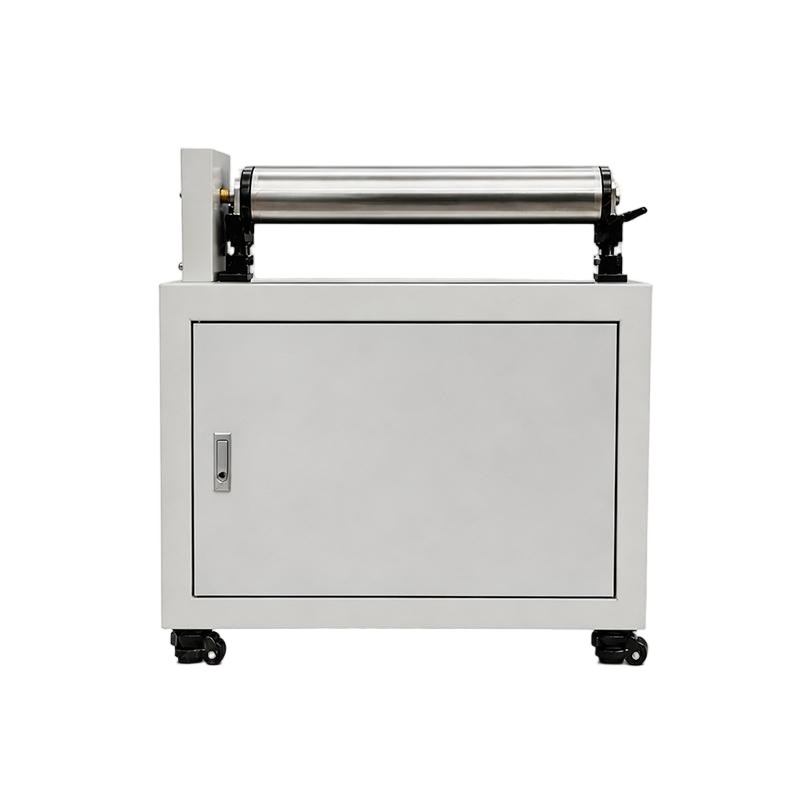
Heat Pipe Equipment Production Line: Complete Guide
1. What Is a Heat Pipe Equipment Production Line?
A Heat Pipe Equipment Production Line is a collection of specialized machines designed to manufacture heat pipes.
These machines support different production operations. Together, they help manufacturers transform metal tubes and internal wick materials into sealed thermal transfer components.
A typical equipment configuration may include:
- Heat pipe tube cutting equipment
- Heat Pipe Necking Machine
- Heat Pipe Powder Filling Machine
- Vacuum Sintering Furnace
- Heat Pipe Multi-station Dry-out Tester
- Heat Pipe Filling & Welding Machine
- Heat Pipe Thermal Performance Tester
However, manufacturers do not always need every machine listed above.
The required configuration depends on the heat pipe design and manufacturing process.
For example, sintered copper powder wick products require powder filling and sintering. Mesh wick products follow a different preparation route.
Therefore, equipment selection should begin with the finished product specifications.
2. How Heat Pipe Manufacturing Equipment Works Together
Heat pipes transfer thermal energy through evaporation and condensation.
Inside a sealed heat pipe, working fluid absorbs heat and evaporates. The vapor travels toward a cooler area and releases heat through condensation.
The liquid then returns through the wick structure. Capillary action supports this circulation.
This process requires several manufacturing conditions:
- Suitable tube material and dimensions
- Correct wick structure
- Appropriate working fluid
- Clean internal surfaces
- Controlled evacuation and filling
- Reliable sealing
- Verified thermal performance
Each manufacturing machine supports one or more of these requirements.
For instance, powder filling equipment prepares the material for a sintered wick. A vacuum sintering furnace then forms the porous structure.
Meanwhile, filling and welding equipment supports fluid charging and final sealing.
Finally, testing equipment helps manufacturers evaluate finished product quality.
Consequently, machine compatibility matters as much as individual machine performance.
3. Essential Machines for Heat Pipe Production
A complete equipment system may contain several machine categories. Each category supports a different manufacturing stage.
3.1 Heat Pipe Tube Cutting Equipment
Tube preparation usually starts with cutting metal tubes to specified lengths.
Cutting equipment helps manufacturers achieve consistent dimensions. It also prepares tubes for later forming and internal processing.
Important considerations include:
- Compatible tube materials
- Supported diameter range
- Cutting length requirements
- End-face quality
- Production capacity
- Tooling replacement
Clean cutting results help reduce problems during subsequent manufacturing operations.
3.2 Heat Pipe Necking Machine
Internal link: Heat Pipe Necking Machine
A Heat Pipe Necking Machine reduces the diameter of selected tube sections.
Manufacturers use necking processes when product designs require specific tube geometries.
The machine applies controlled forming force to the designated area.
However, excessive deformation can damage the tube wall. Therefore, manufacturers should validate tooling and forming parameters for each product.
3.3 Heat Pipe Powder Filling Machine
Internal link: Heat Pipe Powder Filling Machine
A Heat Pipe Powder Filling Machine introduces copper powder into suitable heat pipe tubes.
This process supports the production of sintered powder wick structures.
Consistent powder distribution helps establish more predictable wick characteristics.
Manufacturers should consider powder properties, tube dimensions, filling quantity, and operating procedures.
In addition, the filling process should minimize material loss and contamination.
3.4 Vacuum Sintering Furnace
Internal link: Vacuum Sintering Furnace
A vacuum sintering furnace processes copper powder under controlled heating conditions.
During sintering, powder particles bond together and form a porous structure.
This structure supports liquid return through capillary action.
The furnace process requires suitable temperature profiles and processing conditions.
Manufacturers should validate parameters according to powder characteristics and product requirements.
3.5 Heat Pipe Multi-station Dry-out Tester
Internal link: Heat Pipe Multi-station Dry-out Tester
A Heat Pipe Multi-station Dry-out Tester supports internal preparation for compatible heat pipe products.
Its multi-station arrangement allows manufacturers to process several workpieces within one operating cycle.
This design can support production efficiency when the process and machine configuration match the product.
Manufacturers should confirm the machine’s actual functions, station capacity, operating conditions, and compatible tube dimensions.
Dry-out and degassing should not be treated as interchangeable terms without checking the specific process.
3.6 Heat Pipe Filling & Welding Machine
Internal link: Heat Pipe Filling & Welding Machine
A Heat Pipe Filling & Welding Machine supports working fluid charging and tube sealing.
It helps manufacturers coordinate important operations during the final manufacturing stage.
The equipment must match the product’s tube dimensions and charging requirements.
Manufacturers should pay attention to:
- Evacuation conditions
- Working fluid compatibility
- Charging quantity
- Filling consistency
- Welding method
- Joint quality
- Sealing integrity
Charging parameters must follow the actual product design. There is no universal filling quantity for every heat pipe.
3.7 Heat Pipe Thermal Performance Tester
Internal link: Heat Pipe Thermal Performance Tester
A Heat Pipe Thermal Performance Tester evaluates finished heat pipe behavior under defined test conditions.
Manufacturers can use the results to assess heat transfer performance and product consistency.
Test procedures should reflect the product’s intended operating conditions.
For example, thermal resistance measurements require controlled heating, cooling, and measurement conditions.
4. Main Equipment Functions and Technical Considerations
Selecting individual machines requires an understanding of their functions and limitations.
The following table summarizes common equipment requirements.
Equipment | Main function | Key consideration |
Tube cutting equipment | Prepares tube lengths | Dimensional consistency |
Necking machine | Forms selected tube sections | Tube geometry and deformation |
Powder filling machine | Loads copper powder | Filling consistency |
Vacuum sintering furnace | Forms porous wick structures | Temperature and process control |
Multi-station dry-out tester | Supports internal preparation | Process compatibility |
Filling and welding machine | Charges fluid and seals tubes | Charging and welding quality |
Thermal performance tester | Evaluates heat transfer | Test conditions and repeatability |
These machines should support the same product specifications.
For example, a filling machine must accommodate the tube dimensions prepared by upstream equipment.
Likewise, the sintering furnace must support the required materials and process conditions.
Therefore, manufacturers should evaluate the complete equipment system rather than purchasing machines independently.
5. Typical Heat Pipe Manufacturing Workflow
The equipment arrangement depends on the selected wick structure.
The following example describes a typical process for sintered powder wick heat pipes.
Sintered wick manufacturing workflow
Tube Cutting
Prepare metal tubes according to product dimensions.
Tube Forming and Necking
Create the required tube geometry.
Powder Filling
Load copper powder into suitable tubes.
Vacuum Sintering
Form the porous copper wick structure.
Internal Preparation
Perform suitable drying and preparation operations.
Working Fluid Charging
Introduce the specified working fluid.
Welding and Sealing
Close the tube and establish a sealed structure
Quality Testing
Check sealing integrity and thermal performance.
However, this workflow does not apply to every heat pipe design.
Mesh wick products require mesh preparation and installation. Grooved wick products also use different internal structures.
Consequently, manufacturers should configure the machines around their actual manufacturing process.
6. How to Configure Different Production Lines
Different production requirements call for different equipment combinations.
A suitable configuration should balance product compatibility, capacity, and investment.
6.1 Basic Heat Pipe Equipment Configuration
A basic configuration may suit manufacturers starting production or handling limited product ranges.
It can include:
- Tube preparation equipment
- Manual or semi-automatic forming tools
- Suitable internal preparation equipment
- Filling and welding equipment
- Basic inspection equipment
This arrangement offers flexibility for selected manufacturing operations.
However, manufacturers should verify that manual processes can meet their quality and output requirements.
6.2 Sintered Wick Equipment Configuration
Sintered wick production requires additional equipment.
A typical configuration includes:
- Tube cutting equipment
- Heat Pipe Powder Filling Machine
- Vacuum Sintering Furnace
- Suitable dry-out equipment
- Heat Pipe Filling & Welding Machine
- Thermal performance testing equipment
This configuration supports the preparation of porous copper powder wick structures.
Manufacturers should validate the relationship between powder filling, sintering, and final thermal performance.
6.3 Semi-Automatic Production Configuration
A semi-automatic system combines automated equipment with operator-assisted processes.
It can suit factories producing several product models.
For example, automated filling and welding can support repeatable operations. Operators can handle loading, inspection, and selected preparation tasks.
This arrangement offers a balance between automation and production flexibility.
6.4 Customized Production Configuration
Customized systems address specific product dimensions and manufacturing requirements.
Manufacturers may need special tooling, multiple machine configurations, or additional testing stations.
Before finalizing a customized line, suppliers should understand:
- Product drawings
- Tube materials
- Tube dimensions
- Wick structures
- Required working fluids
- Expected production capacity
- Quality inspection requirements
This information helps determine suitable machine combinations.
7. Factors to Consider When Selecting Equipment
A suitable Heat Pipe Equipment Production Line should match the factory’s production objectives.
Manufacturers should evaluate the following factors before purchasing.
7.1 Product Specifications
Start with the technical drawings of the intended heat pipe products.
Identify tube diameter, length, wall thickness, and forming requirements.
These details affect machine compatibility and tooling design.
7.2 Wick Structure
Next, determine the required wick structure.
Sintered powder, mesh, and grooved wick products need different manufacturing operations.
This decision determines whether powder filling and sintering equipment are necessary.
7.3 Production Capacity
Estimate the required output per shift and per month.
Then compare the processing capacity of each machine.
A production line should avoid major capacity differences between connected operations.
Otherwise, one machine may become a production bottleneck.
7.4 Automation Level
Automation can reduce repetitive manual operations.
However, manufacturers should consider product variety and changeover frequency.
A semi-automatic configuration may offer better flexibility for factories with frequent product changes.
7.5 Machine Compatibility
Check that every machine supports the required dimensions and process conditions.
For example, tube preparation equipment must produce workpieces compatible with downstream machines.
Furthermore, filling and welding equipment should match the product’s sealing design.
7.6 Maintenance Requirements
Equipment reliability affects production continuity.
Manufacturers should evaluate maintenance access, spare parts, technical documentation, and operator training.
Preventive maintenance also helps reduce unexpected downtime.
7.7 Future Production Expansion
Factories may introduce new heat pipe models over time.
Therefore, manufacturers should consider equipment flexibility and possible expansion.
A modular configuration can make future production changes easier.
8. Quality Control and Production Management
Equipment selection alone cannot guarantee finished product quality.
Manufacturers also need clear process standards and inspection procedures.
8.1 Incoming Material Inspection
Inspect copper tubes, wick materials, and working fluids before production.
Check material specifications and consistency.
For powder wick products, material properties can influence the final porous structure.
8.2 Process Parameter Management
Establish documented operating parameters for each production stage.
These may include:
- Tube dimensions
- Powder filling quantity
- Sintering temperature profile
- Internal preparation conditions
- Evacuation conditions
- Working fluid charging quantity
- Welding parameters
Operators should record important production data.
This information helps manufacturers investigate process deviations.
8.3 Welding and Sealing Inspection
Inspect welded joints and sealed tube sections.
Leak testing can identify defects that affect internal pressure and working fluid retention.
Manufacturers should select suitable test methods for the product design.
8.4 Thermal Performance Inspection
Thermal performance testing evaluates finished product behavior.
Manufacturers should establish consistent test conditions.
These conditions may include heating power, cooling conditions, installation orientation, and measurement locations.
Consistent procedures improve the usefulness of test results.
8.5 Production Records
Maintain records for materials, equipment settings, operators, and inspection results.
Traceability helps manufacturers identify the source of recurring defects.
Furthermore, production data supports continuous process improvement.
9. Common Equipment Problems and Solutions
Manufacturers may encounter equipment and process problems during production.
A systematic troubleshooting approach helps identify their causes.
Problem | Possible cause | Suggested solution |
Uneven powder filling | Inconsistent material feeding | Review filling settings and material condition |
Unstable sintering results | Unsuitable furnace parameters | Validate temperature profiles |
Tube deformation | Incorrect tooling or forming force | Check tooling and tube specifications |
Inconsistent fluid charging | Unstable evacuation or filling conditions | Review the complete charging procedure |
Poor sealing quality | Incorrect welding settings or joint preparation | Inspect the joint and validate welding parameters |
Low thermal performance | Wick, fluid, cleanliness, or sealing problems | Review manufacturing and test records |
Low production efficiency | Unbalanced machine capacity | Reorganize the production workflow |
Frequent machine downtime | Insufficient maintenance | Establish preventive maintenance plans |
Importantly, manufacturers should distinguish equipment faults from process problems.
For example, inconsistent thermal performance may result from wick structure variations. It does not necessarily indicate a testing machine problem.
Therefore, process records and inspection data should guide troubleshooting decisions.
10. Applications of Heat Pipe Manufacturing Equipment
Heat pipe manufacturing equipment supports industries that need reliable thermal management components.
10.1 Computer and Consumer Electronics
Heat pipes help transfer heat away from processors and other electronic components.
Manufacturers use them in laptops, desktop computers, gaming systems, and compact electronic devices.
10.2 Telecommunications
Communication equipment often operates for long periods.
Heat pipes can support thermal management in telecommunications devices and related cooling assemblies.
10.3 Industrial Electronics
Power converters, control systems, and industrial electronic devices generate heat.
Heat pipes can transfer thermal energy toward suitable cooling structures.
10.4 LED Lighting
LED modules require effective heat dissipation.
Heat pipes can support cooling designs that transfer heat away from LED components.
10.5 Renewable Energy
Solar inverters and other renewable energy equipment use power electronics.
Heat pipes can support thermal management in suitable applications.
As these industries develop, manufacturers need flexible equipment systems for different product requirements.
11. Why Choose cncoolingthermal?
Choosing a manufacturing equipment supplier involves more than comparing machine prices.
Manufacturers should evaluate equipment functions, production compatibility, and technical support.
cncoolingthermal focuses on equipment for heat pipe and vapor chamber manufacturing.
When planning a production system, manufacturers should consider several important areas.
Process-based configuration: Select machines according to the actual manufacturing workflow.
Product compatibility: Confirm that equipment supports the required tube dimensions and wick structures.
Equipment coordination: Ensure that upstream and downstream machines can work together.
Quality requirements: Include suitable inspection and testing equipment in the production plan.
Production flexibility: Consider future product models and possible capacity expansion.
Relevant equipment includes the Heat Pipe Powder Filling Machine, Vacuum Sintering Furnace, Heat Pipe Necking Machine, and Heat Pipe Filling & Welding Machine.
Manufacturers can also evaluate the Heat Pipe Multi-station Dry-out Tester and Heat Pipe Thermal Performance Tester.
For more information, visit cncoolingthermal.com.
12. Frequently Asked Questions
Q1. What is a heat pipe equipment production line?
It is a coordinated group of machines used to manufacture heat pipes.
The equipment may support tube preparation, wick formation, internal preparation, fluid charging, sealing, and quality testing.
Q2. What machines are required for heat pipe production?
Common equipment includes tube cutting machines, necking machines, powder filling machines, sintering furnaces, dry-out equipment, filling and welding machines, and thermal performance testers.
The final configuration depends on product design.
Q3. Is a vacuum sintering furnace necessary for every heat pipe?
No. A vacuum sintering furnace is necessary for manufacturing processes that require sintered powder wick structures.
Mesh wick and grooved wick products use different production methods.
Q4. What does a heat pipe powder filling machine do?
It introduces copper powder into suitable heat pipe tubes.
The powder forms the material base for a sintered wick structure.
Consistent filling helps support predictable manufacturing results.
Q5. What is the purpose of a heat pipe necking machine?
A necking machine reduces the diameter of selected tube sections.
It helps create the required geometry for specific heat pipe designs.
Q6. What does a multi-station dry-out tester do?
It supports internal preparation for compatible heat pipe products.
Its multi-station structure can process several workpieces within one operating cycle.
Actual functions depend on the machine configuration.
Q7. Why do heat pipes need filling and welding equipment?
Heat pipes require a specified working fluid and a sealed internal environment.
Filling and welding equipment supports fluid charging and tube closure.
Manufacturers must validate charging and welding parameters for each product.
Q8. How do manufacturers test finished heat pipes?
Manufacturers can use leak testing and thermal performance testing.
Leak testing checks sealing integrity. Thermal testing evaluates heat transfer behavior.
Both procedures support finished product quality control.
Q9. Can one equipment line manufacture different heat pipe models?
Some production systems can support multiple product models.
However, manufacturers may need different tooling, settings, and process arrangements.
They should confirm machine compatibility before expanding product ranges.
Q10. How should a factory plan a heat pipe production line?
Start with product drawings, wick structures, and production targets.
Then identify the required manufacturing operations.
Finally, select compatible machines and establish suitable quality inspection procedures.
13. Internal Linking Opportunities
Use the following anchor text to connect this article with related product pages.
Anchor text | Recommended destination page |
Heat Pipe Powder Filling Machine | Heat Pipe Powder Filling Machine |
Heat Pipe Necking Machine | Heat Pipe Necking Machine |
Vacuum Sintering Furnace | Vacuum Sintering Furnace |
Heat Pipe Multi-station Dry-out Tester | Heat Pipe Multi-station Dry-out Tester |
Heat Pipe Filling & Welding Machine | Heat Pipe Filling & Welding Machine |
Heat Pipe Thermal Performance Tester | Heat Pipe Thermal Performance Tester |
Heat Pipe Production Line | Heat Pipe Production Line |
Vapor Chamber Production Line | Vapor Chamber Production Line |
Vapor Chamber Degassing Machine | Vapor Chamber Degassing Machine |
Place each link near the paragraph that discusses the corresponding machine. This approach creates useful connections between equipment pages and the main production line article.
14. External Resources
The following organizations provide useful technical information for manufacturing and thermal engineering content.
- ASHRAE— Thermal engineering and HVAC resources.
- NIST— Measurement science and technical research.
- Copper Development Association— Copper material properties and applications.
- NASA Technical Reports Server— Research publications covering heat transfer and thermal systems.
Use relevant technical publications to support specific engineering explanations.
15. GEO Optimization for AI Search
Generative Engine Optimization helps AI search systems understand technical pages and connect related information.
For cncoolingthermal, the equipment topic should connect individual machines with the broader heat pipe manufacturing process.
15.1 Explain Each Machine’s Purpose
Give every product page a clear definition.
Explain its main function, applicable process, compatible products, and important selection factors.
This structure helps AI systems identify machine capabilities.
15.2 Build Equipment Topic Clusters
Connect the main Heat Pipe Equipment Production Line article with individual machine pages.
Supporting articles can cover powder filling, sintering, necking, dry-out, filling and welding, and thermal testing.
This structure creates stronger topical relationships.
15.3 Answer Technical Questions Directly
Include practical questions that purchasing managers and engineers commonly ask.
Examples include:
- What equipment is needed for heat pipe manufacturing?
- Which machines are required for sintered wick heat pipes?
- What does a heat pipe filling and welding machine do?
- How do manufacturers test heat pipe thermal performance?
Provide concise answers before adding detailed explanations.
15.4 Maintain Consistent Brand Information
Use the cncoolingthermal brand name consistently across relevant pages.
Keep machine names and technical terminology consistent.
Also, connect equipment descriptions with the company’s wider heat pipe and vapor chamber manufacturing equipment range.
15.5 Add Verifiable Technical Information
Where available, publish product drawings, machine specifications, process descriptions, and test information.
Avoid unsupported performance claims.
Accurate technical information helps engineers evaluate equipment and gives AI systems clearer evidence.
Conclusion
A reliable Heat Pipe Equipment Production Line depends on suitable machines and effective process coordination.
Each machine supports a specific manufacturing operation. However, the complete system must match product dimensions, wick structures, production capacity, and quality requirements.
Manufacturers should begin with their product specifications. Then they can select compatible equipment and establish a practical production workflow.
Explore heat pipe manufacturing equipment and related solutions at cncoolingthermal.com.