
Product Description
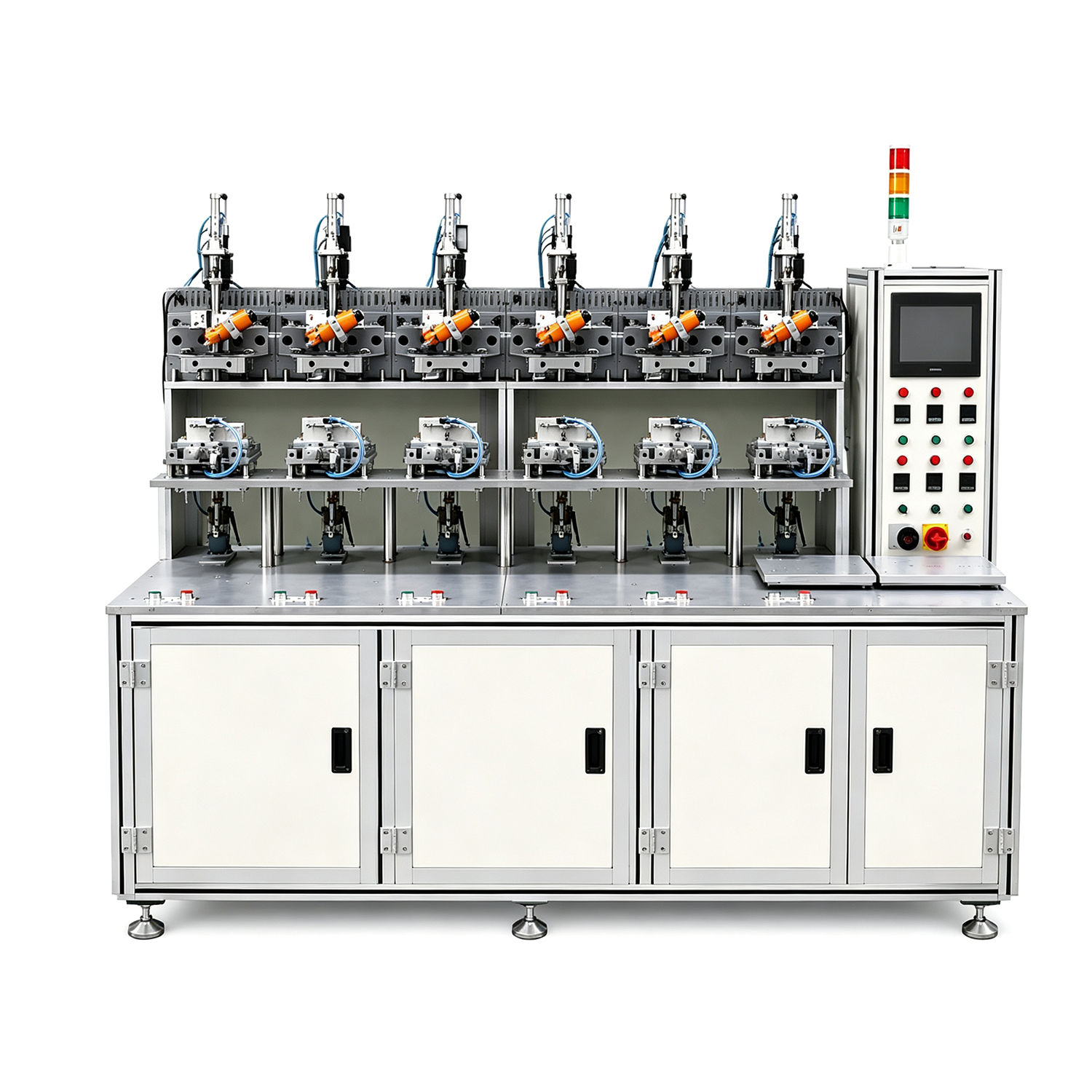
Copper Heat Pipe Vacuum Degassing Machine — Automated NCG Removal, Fluid Injection & Hermetic Sealing
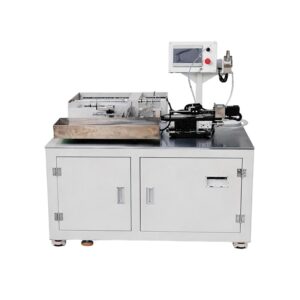
A copper heat pipe vacuum degassing machine is automated production equipment that removes non-condensable gas (NCG) from heat pipes, injects a precisely metered working fluid, and seals the pipe — all within a single 60–120 second cycle. CoolingThermal’s vacuum degassing & fluid injection station is engineered for heat pipe and vapor chamber manufacturers who require consistent thermal performance, zero hermeticity failures, and stable throughput of 100–300 pcs per hour on round (Ø4–Ø10 mm) and flat copper pipes.
Why Choose Our Vacuum Degassing Machine
1.Complete Degassing in One Automated Cycle
The machine removes non-condensable gas (NCG) through three integrated mechanisms: vacuum evacuation to 10⁻³ torr, controlled heating (50–80°C for water pipes, 40–60°C for acetone/methanol), and working fluid injection that creates vapor pressure to expel remaining NCG. The entire cycle — evacuation, heating, fluid injection, and sealing — completes in 60–120 seconds per heat pipe. No manual intervention required.
2.Precision Fluid Injection Across All Working Fluid Types
Injection accuracy reaches ±0.05mL, maintaining consistent fill ratio that directly controls heat pipe thermal performance. The machine supports water, acetone, methanol, and other refrigerant-class fluids with automatic density compensation. Switching between fluid types requires only software selection — no hardware reconfiguration. Fill volume is programmable on the screen interface for different pipe sizes and designs.
3.Multiple Sealing Methods for Different Reliability Requirements
After degassing and fluid injection, the vent end is sealed using one of three methods: mechanical crimping (fast, cost-effective), TIG/spot welding (aerospace-grade reliability), or pinch-off and braze sealing (maximum hermeticity). Operator selects the sealing method based on customer specification and application criticality. All sealing happens automatically within the same station.
4.100% First-Pass Success Rate with Real-Time Quality Detection
Vacuum sensors continuously monitor evacuation progress. If target vacuum cannot be reached (indicating a pipe leak or obstruction), the machine triggers an alarm and rejects the pipe before wasting fluid or sealing a defective unit. Temperature sensors maintain heating setpoint ±2°C, ensuring consistent gas release without overheating. Pressure and flow monitoring verify injection accuracy in real time.
5.Lower Total Cost of Ownership for Production-Scale Manufacturers
By integrating evacuation, heating, fluid injection and sealing into a single station, our vacuum degassing machine reduces line footprint by roughly 40% compared with separate-station configurations, cuts operator headcount per shift, and eliminates the inter-station transfer that is the most common cause of NCG contamination. For manufacturers running 200,000+ heat pipes per month, the typical payback period is 12–18 months on equipment investment.
Technical Specifications
| Specification | Details |
| Voltage | 380V / 220V / 415V (configurable) |
| Motor Power | 3 – 5 kW |
| Pipe Diameter | Ø4 – Ø10 mm (round tubes) |
| Pipe Length | 70 – 500 mm (servo adjustable) |
| Wall Thickness | 0.1 – 0.5 mm |
| Vacuum Level | 10⁻³ torr (0.13 Pa) before injection |
| Heating Temperature | 50–80 °C (water), 40–60 °C (acetone / methanol), ±2 °C control |
| Working Fluid Types | Water, acetone, methanol, R-series refrigerants (auto-compensated) |
| Injection Accuracy | ±0.05 mL (typical pipe charge 0.3–1.5 mL) |
| Sealing Methods | Crimping / TIG-spot welding / Pinch-off & braze (user-selectable) |
| Cycle Time | 60 – 120 sec per pipe (evacuation + heating + injection + sealing) |
| Production Capacity | 100 – 200 pcs/hr standard, up to 300 pcs/hr (optimized) |
| Stations | 4 (degassing tank, vacuum pipeline, control system, clamping fixture) |
| Vacuum System Components | Rotary vane pump, humidity trap, vacuum gauges, control valves (pumps and gauges typically supplied separately) |
| Operation Mode | Semi-automatic / Fully automatic (configurable) |
| Quality Detection | Real-time vacuum sensors, temperature monitors, pressure / flow verification (optional post-process leak test) |
| Machine Dimensions | 1,400 × 800 × 1,700 mm |
| Weight | 480 kg |
Where the Vacuum Degassing Machine Fits in Your Heat Pipe Production Line
The vacuum degassing machine is the critical junction between internal capillary structure preparation and final sealing. It comes after tube shrinking and powder filling, and before welding or post-processing steps. In a typical heat pipe production line, the process flow looks like this:
Tube Cutting → Powder Filling / Mesh Insertion → Tube Shrinking → Vacuum Degassing & Fluid Injection → Sealing & Welding → Flattening / Bending → Thermal Performance Testing
The degassing machine sits at Step 4, directly after tube shrinking. Its performance determines whether downstream sealing and welding steps succeed. If NCG remains inside the sealed pipe, the heat pipe is thermally dead. If fluid charge is inaccurate, thermal performance falls short of specification. We supply equipment for every step in this production line — the degassing machine can be ordered standalone or integrated with our tube shrinking, powder filling, welding, and testing equipment as a complete production system.
How the Vacuum Degassing Machine Works

Vacuum
The heat pipe is clamped in the work chamber. A rotary vane vacuum pump evacuates the chamber to 10⁻³ torr (0.13 Pa), removing air and non-condensable gases. Evacuation continues until the pressure stabilizes at setpoint — typically 30–60 seconds. Vacuum sensors monitor progress continuously; if target vacuum cannot be achieved, an alarm signals a leak or obstruction.

Heating
Once vacuum is achieved, a heating element warms the pipe to a preset temperature (50–80°C for water pipes, 40–60°C for acetone/methanol). Heat causes dissolved gases and moisture trapped in the wick to vaporize and escape through the vacuum line. Temperature is held at setpoint ±2°C for 20–40 minutes depending on pipe size and fluid type. This stage removes 80–90% of residual NCG.

Fluid Injection
Working fluid is injected through a precision metering system calibrated for the selected fluid type. Injection volume is programmed and verified in real time — typically 0.3 to 1.5 mL depending on pipe size. As fluid enters, the vacuum is still maintained, allowing fluid to wet the wick structure uniformly. The remaining 10–20% of NCG is expelled as vapor pressure from the injected fluid builds.

Sealing
After fluid injection, the vent end of the pipe is sealed using the selected method: crimping, welding, or brazing. The seal is completed in the same station without removing the pipe from the work chamber. Sealing happens automatically — no manual handling required. Post-sealing, the pipe undergoes final inspection and moves to downstream testing.
Reviews
There are no reviews yet.