
Product Description
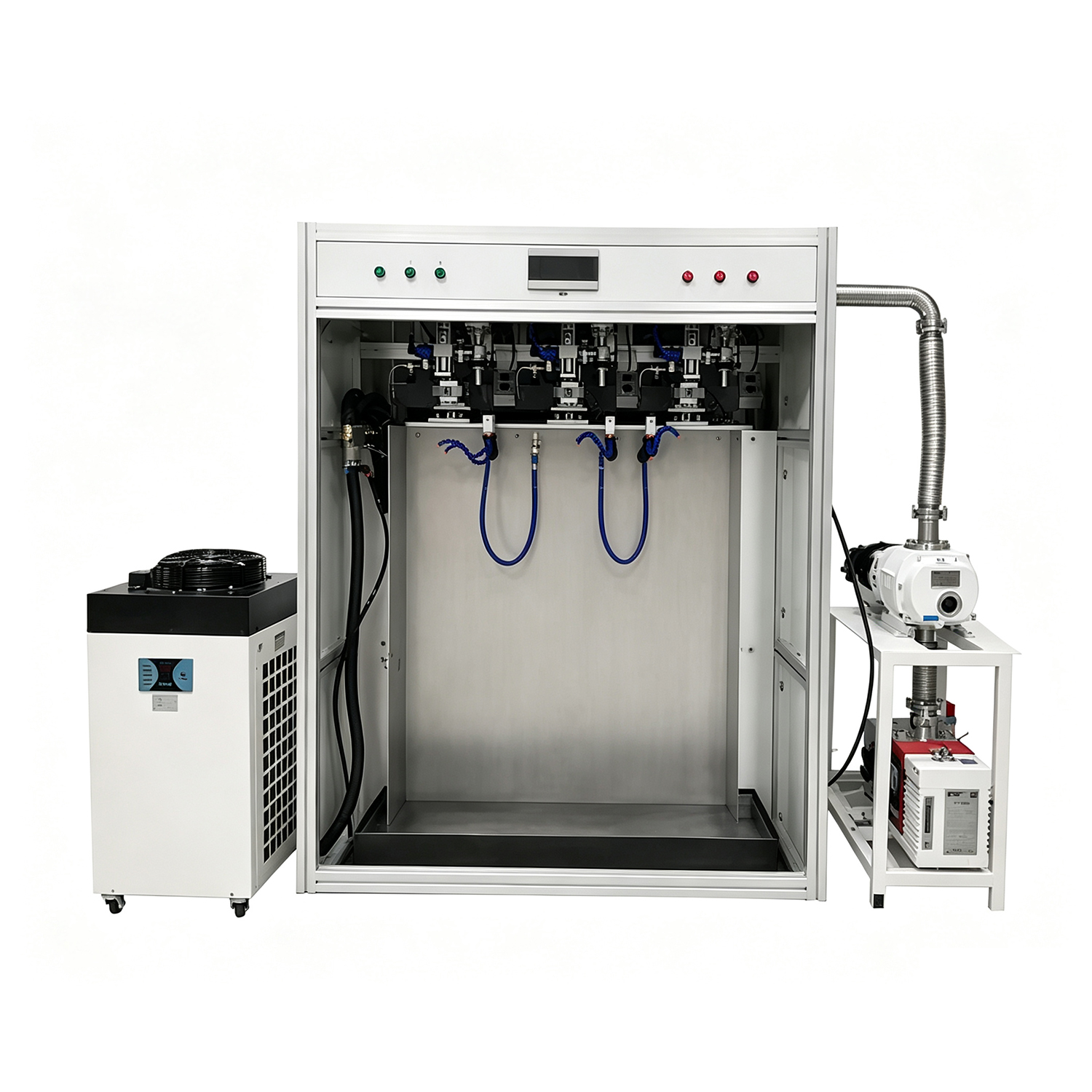
Automatic Vacuum Degassing and Fluid Injection for Acetone, Methanol, and Refrigerant Heat Pipes
Standard copper-water heat pipes use deionized water as the working fluid. But a growing number of applications — cold-environment telecom, defense electronics, aerospace systems, EV battery cooling, and sub-zero industrial equipment — need heat pipes that work below 0°C. Water freezes. Acetone, methanol, ammonia, and other refrigerant-class fluids do not.
Manufacturing heat pipes with non-water working fluids requires filling equipment specifically built for these fluids. Acetone and methanol have different vapor pressures, viscosities, and chemical handling requirements than water. You cannot run acetone through a standard water injection station and expect accurate fill volume or safe operation.
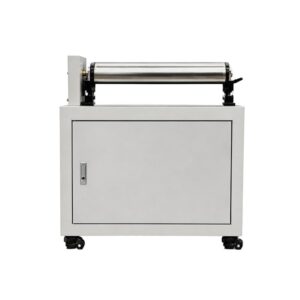
This machine handles the full fluid injection cycle for non-water heat pipe production: vacuum degassing, precision fluid injection, and sealed filling — for acetone, methanol, ammonia, ethanol, and other refrigerant-class working fluids used in heat pipes and vapor chambers operating in extended temperature ranges.
Key Specifications
| Parameter | Specification |
| Compatible fluids | Acetone, methanol, ethanol, ammonia, R-series refrigerants, custom fluids |
| Injection accuracy | ±0.2g |
| Vacuum level | 10⁻³ torr (before injection) |
| Pipe diameter range | Ø4 – Ø10mm |
| Pipe length range | 80 – 500mm |
| Operation mode | Semi-automatic / fully automatic (configurable) |
| Fluid containment | Sealed fluid handling system with vapor recovery |
| Safety | Explosion-proof electrical components for flammable fluids |
| Power supply | 220V / 380V / 415V (configurable) |
Applications
Heat pipes filled with non-water working fluids serve applications where the operating temperature range extends below 0°C or where water is incompatible with the system requirements:
Acetone heat pipes (operating range approximately -55°C to +100°C)
Used in outdoor telecom base stations, military electronics, cold-chain logistics monitoring, and arctic/alpine instrumentation where ambient temperatures regularly drop below -30°C.
Methanol heat pipes (operating range approximately -40°C to +120°C)
Used in defense and aerospace electronics, satellite thermal management, and outdoor LED lighting in cold climates.
Ammonia heat pipes (operating range approximately -60°C to +100°C)
Used in spacecraft thermal control systems, deep-cold industrial processes, and cryogenic scientific equipment. Requires stainless steel envelope (not copper) due to material compatibility.
R-series refrigerant heat pipes
Used in specialty industrial cooling where refrigerant-class fluids offer performance advantages at specific operating temperature windows. R134a, R22, and newer low-GWP refrigerants are used in niche applications.
Ethanol heat pipes
Used in moderate-cold applications where methanol toxicity is a concern and acetone vapor pressure characteristics are not ideal.
Why Non-Water Fluids Need Dedicated Filling Equipment
A water injection station designed for standard copper-water heat pipe production cannot safely or accurately handle acetone, methanol, or other refrigerant-class fluids. Three engineering differences drive the need for a dedicated fluid filling machine:
1. Vapor Pressure Management
Water at room temperature has relatively low vapor pressure, so vacuum degassing and injection can proceed at standard ambient conditions. Acetone and methanol have significantly higher vapor pressures at the same temperature. If you inject acetone at room temperature into a vacuum environment without temperature control, a large fraction of the fluid evaporates immediately — your target fill volume is wrong, and you get heat pipes that dry out under load.
This machine uses temperature-controlled fluid handling — chilled fluid reservoirs and ice-bath immersion during the injection phase — to suppress vapor pressure and keep the fill volume accurate even for high-vapor-pressure fluids.
2. Chemical Handling and Safety
Acetone and methanol are flammable. Ammonia is toxic and corrosive. A water injection station has no provision for flammable-fluid containment, vapor recovery, or explosion-proof electrical components.
This machine integrates sealed fluid handling pathways, vapor recovery systems, and explosion-proof motors and controls rated for flammable working fluid environments. Fluid contact surfaces are selected for chemical compatibility with each working fluid type.
3. Injection Accuracy Calibration
Water has a density of approximately 1.0 g/mL. Acetone is 0.79 g/mL. Methanol is 0.79 g/mL. Ammonia liquid density varies significantly with temperature. A water-calibrated injection system will consistently over- or under-fill when running acetone, methanol, or ammonia unless the metering system is re-calibrated for each fluid.
This machine has configurable fluid density compensation — the metering system is pre-calibrated for each supported working fluid, and operators can switch between fluid types without manual re-calibration. Injection accuracy of ±0.2g is maintained across all supported fluids.
Fluid Compatibility Reference
| Working Fluid | Formula | Boiling Pt (1 atm) | Density (g/mL) | Envelope | Temp Range |
| Deionized water | H₂O | 100°C | 1.00 | Copper | +25 to +150°C |
| Acetone | C₃H₆O | 56°C | 0.79 | Cu, SS | -55 to +100°C |
| Methanol | CH₃OH | 65°C | 0.79 | Cu, SS | -40 to +120°C |
| Ethanol | C₂H₅OH | 78°C | 0.79 | Cu, SS | -30 to +130°C |
| Ammonia | NH₃ | -33°C | 0.68 | SS, Al | -60 to +100°C |
| R134a | CF₃CH₂F | -26°C | 1.21 | SS, Al | -40 to +80°C |
This machine supports all fluids listed above. Custom fluid configurations are available for specialty applications — contact our engineering team with your fluid specification and operating temperature range.
How the Heat Pipe Fluid Filling Machine Works

Vacuum Degassing

Chilled Fluid Injection

Reviews
There are no reviews yet.