
Product Description
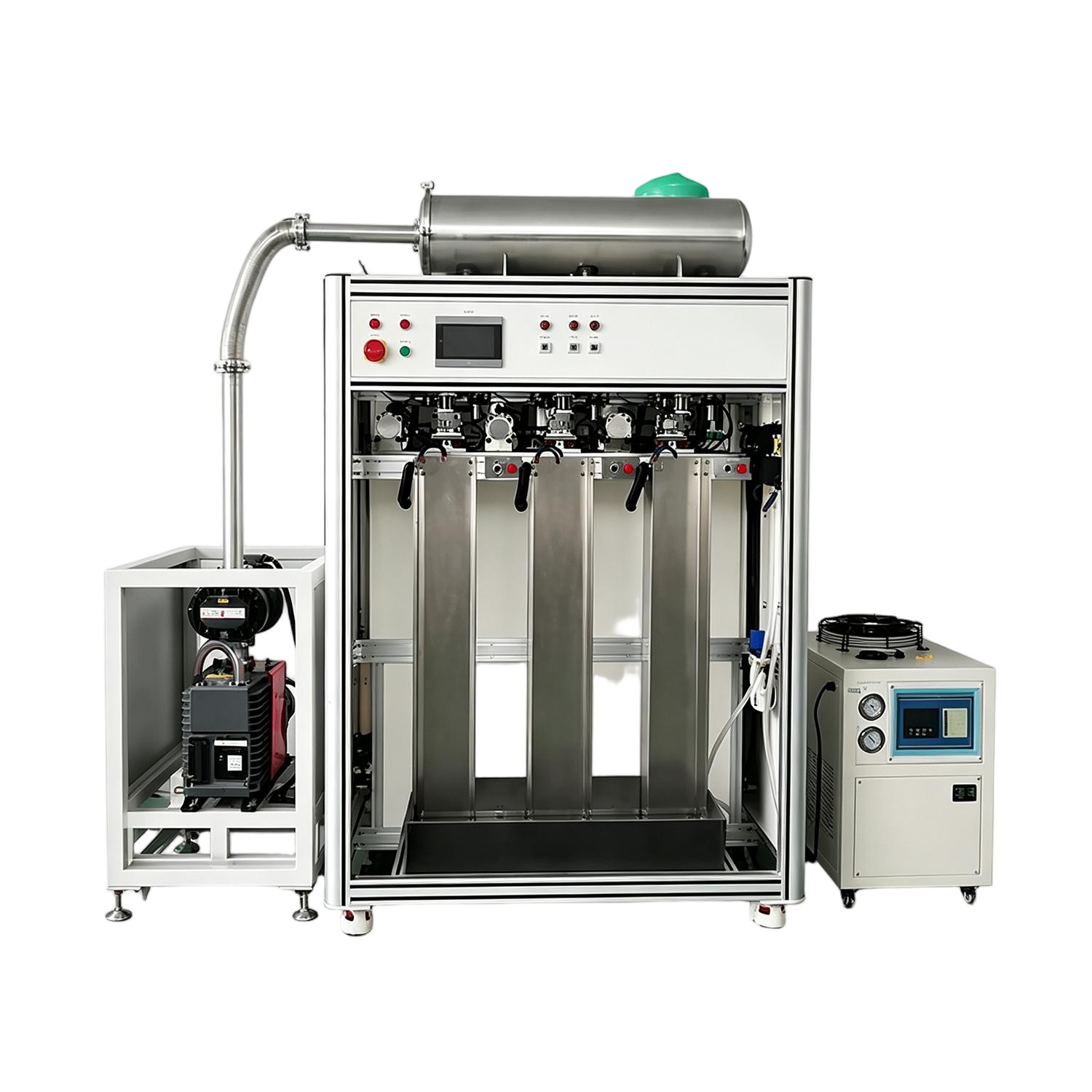
Multi-Fluid Heat Pipe Working Fluid Injection Machine — Precision Injection for Water, Ammonia, Methanol, Acetone & Custom Refrigerants
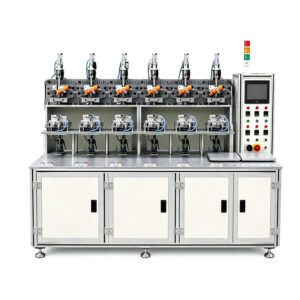
A multi-fluid heat pipe working fluid injection machine is automated production equipment capable of precisely injecting any working fluid—water, ammonia, methanol, acetone, ethanol, or custom refrigerant mixtures—into sealed heat pipe tubes with ±0.05mL accuracy in a hermetically sealed, fully evacuated vacuum chamber. Unlike single-fluid equipment locked into one application market, this multi-fluid system enables manufacturers to serve data center (water), aerospace (ammonia), consumer electronics (methanol/acetone), and electric vehicle (custom fluids) thermal solutions simultaneously from a single production line. According to PatSnap’s 2025 heat pipe research, working fluid selection is the fundamental determinant of heat pipe performance, material compatibility, and operational longevity—making multi-fluid injection capability essential for manufacturers competing across multiple market segments.
Why Manufacturers Choose Our Multi-Fluid Injection Machine
1.Inject Any Working Fluid—Water, Ammonia, Methanol, Acetone, Custom Mixtures
Data center thermal modules demand water (30–200°C optimal range, highest thermal conductivity). Aerospace systems require ammonia (–60°C to 100°C flight envelope compatibility). Consumer electronics need methanol or acetone (room-temperature optimization, cost efficiency). EV battery cooling uses custom fluid blends. Our machine handles all four markets without equipment changes. Operator selects working fluid type via touchscreen, machine automatically adjusts injection temperature, pump speed, vacuum duration, and post-injection parameters. Zero manual setup. Zero cross-contamination risk. One production line serves 4 distinct $1B+ market segments simultaneously.
2.Sealed Vacuum Chamber Prevents Fluid Evaporation & Contamination
Traditional open-system injection allows volatile fluids (acetone) to evaporate before injection completes, causing underfilled heat pipes and field failures. Our sealed vacuum chamber (10⁻³ torr) maintains hermetic conditions throughout injection. No atmospheric exposure means even acetone cannot evaporate. The heat pipe is sealed immediately after injection, trapping working fluid in perfect condition. Result: 100% first-pass quality, zero rework, zero field failures due to fluid loss.
3.±0.05mL Precision Injection Ensures Consistent Thermal Performance
Heat pipe performance is exquisitely sensitive to working fluid charge. Too much → flooding (liquid blocks vapor, thermal resistance increases 2–3x). Too little → dryout (wick fails at high load, catastrophic failure). PatSnap research confirms: proper fluid charge directly governs heat pipe longevity and thermal conductivity. Our precision syringe pump delivers ±0.05mL accuracy for any fluid (water, ammonia, methanol, acetone). Every heat pipe receives identical fluid volume → identical thermal performance → repeatable quality across production batches.
4.Intelligent Fluid Management Prevents Material Incompatibility Disasters
PatSnap research warns: ‘Incompatible fluid-material combinations lead to corrosion, non-condensable gas generation, and eventual heat pipe failure.’ Water corrodes aluminum. Ammonia is incompatible with copper. Alcohols degrade certain sealing materials. Our machine’s fluid management system automatically adjusts heating, vacuum timing, and post-injection re-evacuation based on fluid type. For water: extended vacuum hold prevents hydrogen gas generation. For ammonia: gentle heating preserves material integrity. For alcohols: precise temperature control prevents thermal breakdown. Proper material-fluid pairing → extended heat pipe life.
5.Complete Data Logging & Purity Monitoring for Aerospace/Automotive Compliance
Every injection is logged: fluid type, volume, temperature, vacuum level, seal integrity, timestamp. Inline purity sensors detect water contamination, particle size, and chemical stability. Data exports to CSV for SPC analysis and regulatory compliance (AS9100 aerospace, IATF 16949 automotive). Full traceability = customer confidence = reduced warranty claims. Multi-shift production can handle different fluids without cross-contamination — integrated purge cycles and dedicated cartridges ensure 100% fluid isolation.
Machine Specification
| Specification | Details |
| Supported Working Fluids | Water, ammonia, methanol, acetone, ethanol, custom refrigerants, binary mixtures |
| Injection Accuracy | ±0.05 mL (precision syringe pump) |
| Injection Volume Range | 0.1–5.0 mL per heat pipe (programmable) |
| Injection Speed | 0.5–2.0 mL/min (adaptive to fluid viscosity) |
| Vacuum System | 10⁻³ torr achievable (removes >99.9% NCG) |
| Evacuation Time | 2–5 minutes (fluid-dependent) |
| Temperature Control | Water 40–80°C, Methanol 30–60°C, Acetone 20–40°C, auto-adjustable |
| Fluid Changeover Time | < 10 minutes (empty cartridge, install new, auto-flush) |
| Heat Pipe Diameter Range | Ø4–Ø12 mm (ultra-thin to standard) |
| Heat Pipe Length Range | 70–500 mm |
| Production Capacity | 100–300 pcs/hour (single-station) |
| Multi-Station Config | 2–4 stations → 400–1200 pcs/hour |
| Cycle Time per Pipe | 3–8 minutes (evacuation + injection + sealing) |
| Control System | PLC + touchscreen with auto-parameter loading |
| Fluid Purity Monitoring | Inline sensors detect water content, particles, chemical stability |
| Data Logging | Every injection logged: fluid, volume, temp, vacuum, seal integrity |
| Barcode Integration | Optional barcode scanner for heat pipe ID tracking |
| Post-Seal Testing | Optional inline helium leak test verification |
| Sealing Methods | Laser welding or high-frequency induction soldering (integrated) |
| Input Voltage | AC 220V, 3-phase (110V or 380V on request) |
| Power Consumption | 3–6 kW (depends on vacuum pump + heating) |
| Machine Dimensions | 1,200 × 900 × 1,600 mm (single-station) |
| Machine Weight | 400 kg |
| Fluid Storage | 1–5L cartridges per fluid type (separate, no cross-contamination) |
| Cooling System | Water-cooled vacuum pump + chiller for thermal stability |
| Compliance Standards | ISO 13849-1, IATF 16949 (automotive), AS9100 (aerospace) |
Where the Multi-Fluid Injection Machine Fits in Heat Pipe Production
The multi-fluid injection machine is positioned after heat pipe tube formation and capillary structure insertion, and before thermal performance testing. This is the critical step where non-condensable gases are removed and precise working fluid charge is established.
In a typical heat pipe production line, the process flow is:
Tube Forming & Bending → Capillary Structure Insertion → Tube Shrinking/End Cap Prep → Vacuum Degassing & Multi-Fluid Injection (THIS MACHINE) → Sealing (Welding/Soldering) → Thermal Performance Testing → Final Inspection & Packaging
This machine sits at Step 4, the junction between dry tube preparation and sealed heat pipe testing. Its ability to inject the correct working fluid for each application (water for data center, ammonia for aerospace, methanol for consumer, acetone for ultra-thin designs) is mission-critical. Wrong fluid = wrong application market. No fluid = non-functional product.
CoolingThermal supplies complete heat pipe production lines with specialized equipment tuned for multi-application manufacturing. The multi-fluid injection machine can be ordered standalone for retrofit into existing production lines or integrated with our tube forming, capillary insertion, bending, and testing equipment as a complete turnkey solution.
Industry Applications for Multi-Fluid Heat Pipes
Data Center & Server Thermal Cooling (Water-Based)
Data centers and AI accelerators (500W+ thermal loads) require water heat pipes for extreme performance. Water offers highest thermal conductivity (30–200°C operating range). Multi-fluid machine enables rapid scaling of water heat pipe production for NVIDIA, AMD, Intel applications. Material: stainless steel or copper with nickel plating.
Aerospace & Satellite Thermal Systems (Ammonia-Based)
Spacecraft, satellites, and avionics (–60°C to 100°C flight envelope) use ammonia heat pipes with proven space qualification. Multi-fluid injection capability supports complete traceability and AS9100 compliance. Material: aluminum or stainless steel (copper incompatible with ammonia).
Consumer Electronics — Smartphones & Gaming Laptops (Methanol/Acetone)
Smartphones and gaming laptops (0–100°C operating) use methanol or acetone heat pipes for cost-effective high-volume production. Ultra-thin designs (Ø4–Ø6mm, 0.1–0.3mm wall) require sealed vacuum injection to prevent fluid evaporation. Material: standard copper.
Electric Vehicle Battery & Power Electronics Cooling (Custom Fluids)
EV thermal modules use optimized fluid blends for battery pack uniformity and power electronics cooling. Multi-fluid capability allows OEMs to experiment with proprietary fluid formulations. Quick changeover (< 10 min) enables rapid prototyping and volume production transitions.
Wearable & IoT Ultra-Thin Thermal Solutions (Low-Cost Alcohols)
Smartwatches, AR glasses, and IoT devices require ultra-low-cost, ultra-thin heat pipes. Acetone and ethanol provide cost-optimal solutions. Multi-fluid production from single machine maximizes capital efficiency.
How the Multi-Fluid Injection Machine Works

Heat Pipe Loading

Vacuum Hold

Temperature Adjustment

Precision Fluid Injection

Post-Injection Re-Evacuation

Reviews
There are no reviews yet.