
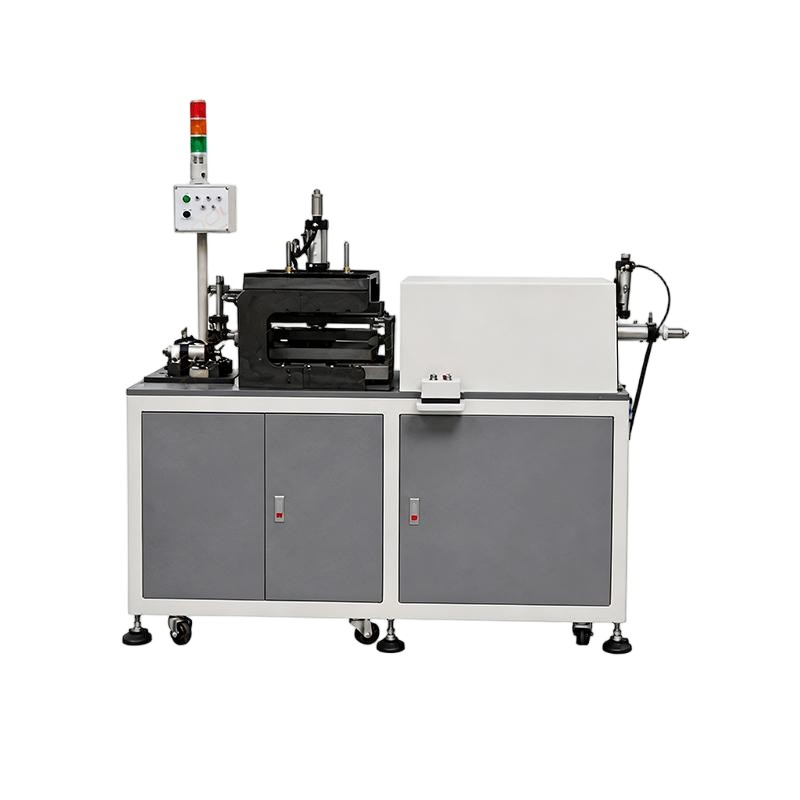
Product Description
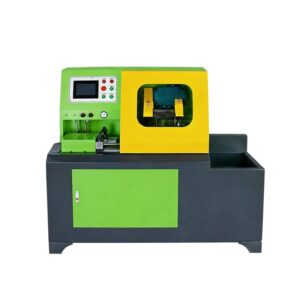
The pipe shrinking machine is a forming equipment used in heat pipe production to reduce the diameter of copper or aluminum tubes after filling with working medium and capillary structure. It completes tube shrinking, length sizing, and sealing shaping in an automated process.
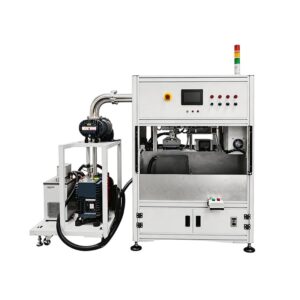
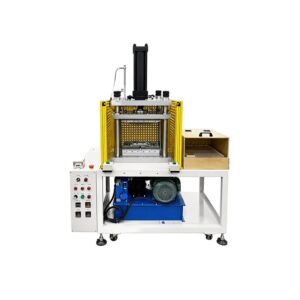
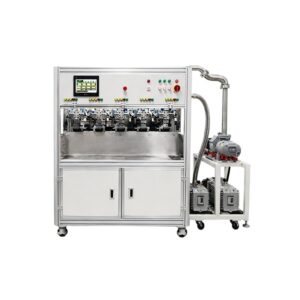
We offer multiple pipe shrinking machine configurations for different tube specifications and production requirements. Available models cover pipe diameters from D3 to D12, wall thicknesses from 0.08 to 1.0mm, and pipe lengths from 70 to 500mm, with production capacity ranging from 180 to 500 pieces per hour. Forming methods include servo-driven lead screw positioning, hydraulic feed rotary spindle, and rotational spinning, each suited to different tube sizes and wall thickness conditions.
All machines support fully automatic feeding and discharging. Equipment can be ordered as standalone units or integrated into a complete heat pipe production line. Custom specifications and OEM/ODM orders are available.
Why Choose Our Tube Reducing Machine
Stable Forming Accuracy
All models use servo motor-controlled feeding and positioning to ensure consistent tube diameter and length after shrinking. The tube wall maintains close adhesion to the internal capillary structure, with smooth surface finish and uniform wall thickness. Forming dimensions remain stable across continuous production cycles.
Multiple Forming Methods for Different Specifications
We provide three forming methods — servo lead screw positioning, hydraulic rotary spindle, and rotational spinning — to match different pipe diameters (D3–D12), wall thicknesses (0.08–1.0mm), and production requirements. You select the configuration based on your actual tube specifications, not a one-size-fits-all machine.
Fully Automatic Operation
All machines support automatic feeding, shrinking, and discharging. Integrated models further combine tube shrinking with core rod pulling, powder filling, or pipe cutting in a single automated process, reducing manual handling and improving production consistency. Capacity ranges from 180 to 500 pieces per hour depending on the model.
Custom Configuration & Line Integration
Each machine can be configured to your specific pipe diameter, length, and wall thickness requirements. Equipment is available as standalone units or integrated into a complete heat pipe production line alongside degassing, welding, and testing equipment. OEM/ODM orders are supported.
Where the Tube Swaging Machine Fits in Your Heat Pipe Production Line
The tube swaging process is one of the first forming steps in heat pipe manufacturing. After the copper tube is cut to length and filled with capillary structure (copper powder, copper mesh, or sintered wick), the pipe reducing machine shrinks the tube diameter, fixes the final length, and shapes the sealing end — preparing the tube for the next stages of production.
In a typical heat pipe production line, the process flow before and after tube shrinking looks like this:
Tube Cutting → Powder Filling / Mesh Insertion → Tube Shrinking → Water Injection & Degassing → Sealing & Welding → Flattening / Bending → Performance Testing
The pipe narrowing machine sits between the capillary structure filling stage and the vacuum degassing stage. Its forming quality directly affects the seal integrity during degassing and welding — if the shrink diameter or wall adhesion is inconsistent, it leads to vacuum leakage or sealing failure in downstream processes.
We supply equipment for every step in this production line. If you are building a new heat pipe line or upgrading an existing one, the tube shrinking machine can be ordered as a standalone unit or configured together with our powder filling, degassing, welding, and testing equipment as an integrated production line solution.
Tube Materials & Specifications Our Pipe Forming Machine Supports
Our tube shrinking equipment is designed for processing metal tubes used in heat pipe manufacturing. Below are the tube materials and specification ranges supported across our current machine models.
Supported Tube Materials
The primary tube material processed by our equipment is copper tube, which is the standard material for heat pipe and vapor chamber production due to its high thermal conductivity and compatibility with water as the working fluid. Our machines also support aluminum tube processing for specific heat pipe applications. Both materials can be processed in their raw state or after internal capillary structure filling (copper powder, copper mesh, or sintered wick).
Tube Specification Ranges
Outer Diameter / Ø3 to Ø12 mm, covering small-diameter tubes for consumer electronics and larger tubes for industrial thermal modules.
Wall Thickness /: 0.08 to 1.0 mm. Thin-wall tubes (0.08–0.3mm) are processed by servo lead screw or spinning models; thicker wall tubes (0.8–1.0mm) are handled by hydraulic rotary spindle models.
Tube Length: 70 to 600 mm, adjustable through servo motor control. Length can be set directly on the screen interface.Shrink Angle: ≤ 45°, with common configurations at 30° and 45°.
Shrink Length: ≤ 70 mm (tail end or head end). ≤ 70 mm。
How the Heat Pipe Pipe Shrinking Machine Works

Automatic Feeding & Length Positioning

Diameter Reduction & End Forming

Reviews
There are no reviews yet.